
When most homeowners think about refinancing, they jump straight to the classic options: a 30-year mortgage for flexibility or a 15-year mortgage for fast payoff and big interest savings. But in between those two lies a powerful — and often overlooked — middle path:
The 20-year mortgage refinance.
A 20-year refinance can reduce your monthly payment (compared to a 15-year loan), shorten your payoff timeline (compared to a 30-year loan), and generate substantial long-term savings. It’s the “just right” loan term for homeowners who want balance — not extremes.
This guide breaks down how 20-year refinances work, who benefits most, eligibility, payment comparisons, savings potential, and how to check if your lender is giving you a fair offer.
Key Takeaways
✅ A 20-year mortgage offers lower monthly payments than a 15-year mortgage and faster payoff than a 30-year mortgage
✅ 20-year rates often fall between 15-year and 30-year mortgage rates, though pricing varies by lender and market conditions
✅ This term is ideal for homeowners who want meaningful savings without a big payment jump
✅ Approval depends on credit, equity, DTI, and recent payment history
What Is a 20-Year Refinance?
A 20-year refinance replaces your current mortgage with a new loan that pays off over 20 years. It’s a hybrid solution:
Shorter than a 30-year → Faster payoff & lower interest costs
Longer than a 15-year → Lower monthly payment & easier affordability
While 20-year mortgages are less common, many lenders offer them — and they can be a strategic sweet spot for both savings and flexibility.
Why Homeowners Choose a 20-Year Mortgage
The 20-year mortgage can be an attractive option for borrowers seeking a middle ground between 15- and 30-year terms.
1️⃣ Balanced Monthly Payment
A 15-year mortgage may produce massive savings — but the payment jump can be steep.
A 20-year term:
Lowers your rate compared to a 30-year
Lowers your payment compared to a 15-year loan
Gives you more flexibility without sacrificing long-term savings
For many borrowers, it’s the perfect middle ground.
2️⃣ Significant Interest Savings
A 20-year loan reduces:
Total interest paid
The number of monthly payments
Borrowing costs over the life of the loan
It may not save as much as a 15-year loan, but savings are still substantial compared to staying in a 30-year loan.
3️⃣ Faster Equity Growth
You build equity more quickly than with a 30-year mortgage.
Faster equity provides:
Higher net worth
Better HELOC/refinance options
More protection if the market dips
The ability to eliminate PMI faster
4️⃣ More Predictable Path to Retirement
A 20-year mortgage helps homeowners align payoff with life goals:
Paying off the home before retirement
Predicting long-term housing costs
Reducing interest during peak income years
5️⃣ Lower Risk Than a 15-Year Payment
A 15-year mortgage accelerates payoff — but comes with a large increase in payments.
A 20-year mortgage gives you:
More margin in your monthly budget
Less risk if income changes
More cushion for unexpected expenses
20-Year vs 30-Year vs 15-Year: Payment & Savings Comparison
Let’s compare these three popular terms using the same loan amount.
Loan Example:
$350,000 mortgage
Assume typical market rates.
Term | Rate (Example) | Monthly Payment | Total Interest |
30-Year | 6.25% | ~$2,155 | ~$425,000 |
20-Year | 5.75% | ~$2,435 | ~$235,000 |
15-Year | 5.25% | ~$2,804 | ~$154,000 |
Highlights:
The 20-year saves you about $190,000 in interest vs. a 30-year.
The monthly payment is $369 lower than a 15-year loan.
The 20-year offers substantial savings without straining cash flow.
Example for illustration only — rates and payments vary by lender, borrower profile, and market conditions.
Why 20-Year Refinance Pricing Can Vary Between Lenders
Many homeowners assume refinance offers are mostly the same across lenders.
In reality, pricing can vary based on:
• Credit score • Loan-to-value ratio (LTV) • Debt-to-income ratio • Loan size • Property type • Internal lender pricing models
Even small differences — such as 0.25% in rate or a few thousand dollars in fees — can affect the total cost of a refinance over time.
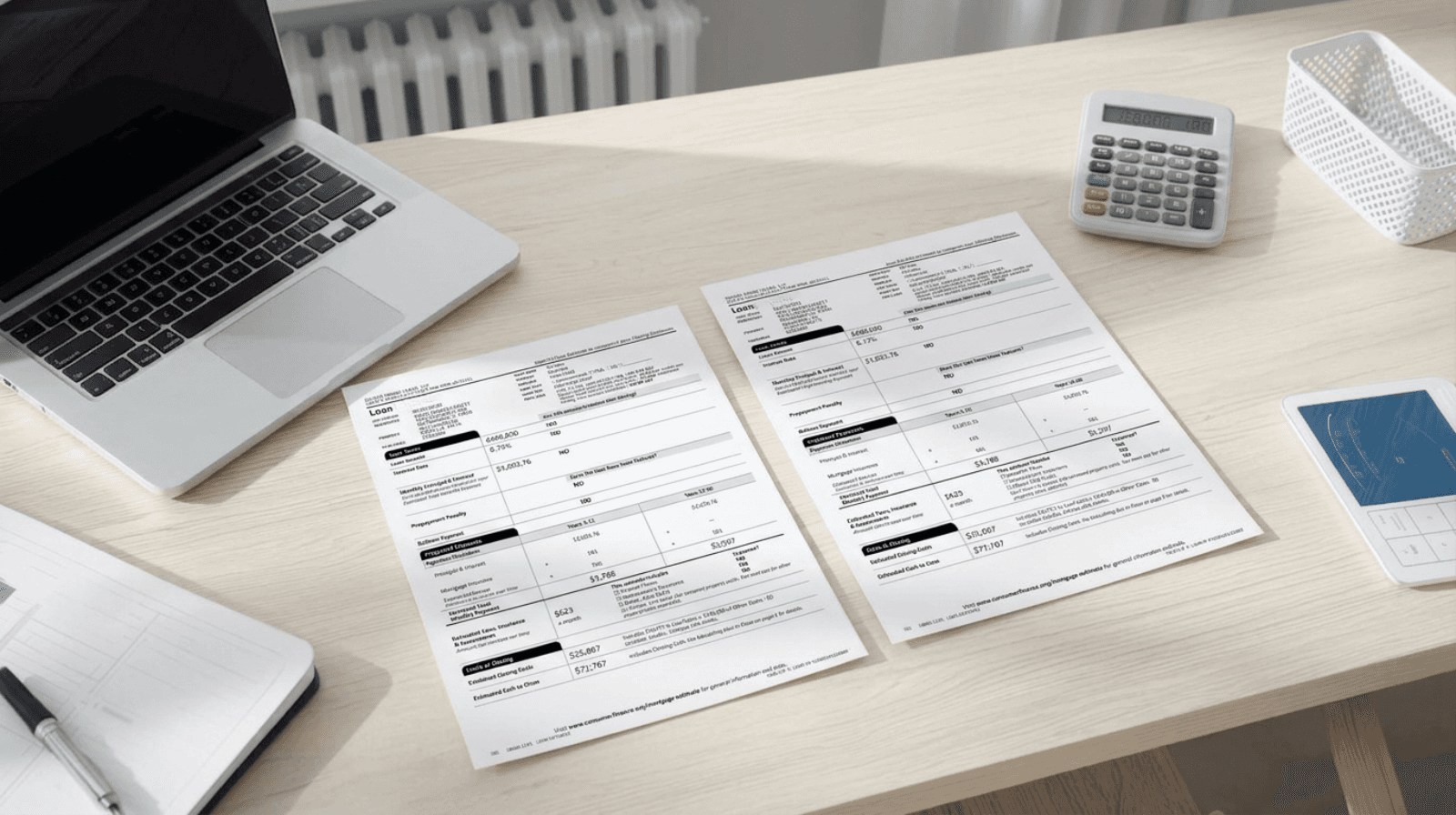
That’s why some homeowners review their Loan Estimate before locking their rate.
When Refinancing to a 20-Year Mortgage Makes Sense
A 20-year mortgage is ideal when you want savings and speed — but also want flexibility.
1️⃣ You Want a Lower Payment Than a 15-Year Offers
If a 15-year payment is too high but a 30-year feels too slow, a 20-year is the perfect middle option.
2️⃣ You Have Strong Financial Stability
A 20-year works well when you have:
Steady income
Manageable debt
A stable job
Money left for savings, retirement, or investments
3️⃣ You Want to Pay Off the Mortgage Before Retirement
A 20-year loan can align perfectly with your long-term goals:
Children finishing high school
Retirement savings milestones
Planning for lower expenses later
4️⃣ You Want Substantial Long-Term Savings
A 20-year loan can still generate significant interest savings compared to a 30-year, though typically less than a 15-year loan.
5️⃣ Your Equity Has Grown
With higher equity, lenders often offer:
Lower rates
Lower fees
Better LTV tiers
Better pricing on shorter terms
If your home value has risen significantly, a 20-year refinance can maximize that advantage.
When a 20-Year Refinance Does Not Make Sense
A 20-year term may not be right if:
1️⃣ Your Budget Is Tight
Even though the payment is lower than a 15-year payment, it’s still higher than a 30-year payment.
2️⃣ You Need Maximum Cash Flow
If “monthly breathing room” is the priority, the 30-year is still the most affordable.
3️⃣ You Have High-Interest Debt
If you’re carrying expensive credit card or personal loan balances, it may be better to:
Refinance into a 30-year
Free up cash
Pay down high-interest debt first
4️⃣ You’re Planning to Sell Soon
Short-term savings are strongest the longer you stay in the home.
5️⃣ You’re in a Career Transition
If income is inconsistent (freelancing, new job, medical residency, business startup), a 30-year loan may offer better stability.
Eligibility Requirements for a 20-Year Refinance
Qualification is similar to other conventional refinances.
1️⃣ Credit Score
Typical minimums:
620 for conventional loans
700+ for best pricing
2️⃣ Equity / Loan-to-Value (LTV)
General rules:
Best pricing at 80% LTV or lower
Some lenders allow up to 95% LTV
3️⃣ Debt-to-Income Ratio (DTI)
Most lenders prefer:
≤45% DTI
Some allow up to 50% with compensating factors
4️⃣ Income Stability
You’ll need:
Two years of steady income
Documented earnings
Predictable employment
5️⃣ Payment History
Most lenders require:
No late mortgage payments in the past 6–12 months
20-Year Refinance Pros and Cons
✔ Pros
Lower interest rates than a 30-year
Faster payoff
Significant interest savings
More manageable payment than a 15-year loan
Faster equity building
✘ Cons
Higher payment than a 30-year
Slightly higher rate than a 15-year
Not always advertised by lenders
May stretch your budget if income fluctuates
Who Benefits Most from a 20-Year Mortgage?
A 20-year refinance is ideal for:
Homeowners with rising incomes
Borrowers who want a balance between savings and flexibility
Families planning long-term housing stability
Homeowners who want to avoid the 15-year payment spike
Borrowers aiming for retirement payoff
It’s a highly efficient choice for those who prioritize long-term savings but still want a comfortable monthly payment.
FAQs
1. Do all lenders offer 20-year mortgages?
No, but many do. Some list them as “custom term” refinances.
2. Is the interest rate much higher than a 15-year loan?
Typically slightly higher — around 0.25%–0.50% — but still lower than a 30-year.
3. Can I remove PMI with a 20-year refinance?
Yes, if your LTV is 80% or below.
4. Will my payment still go up compared to a 30-year refinance?
Yes, but usually only moderately, making it accessible for many borrowers.
5. Is a 20-year refinance good for building equity?
Yes. It builds equity much faster than a 30-year mortgage.
Bottom Line
A 20-year refinance is a powerful middle-ground option that balances affordability with long-term savings. It’s ideal for homeowners who want to pay off their mortgage in less than 30 years but don’t want the higher payment of a 15-year loan.
If you're considering a 20-year refinance, make sure your lender is offering the best possible rate and terms — especially since 20-year pricing varies widely across lenders.
You can upload your Loan Estimate to Fincast to see how your refinance terms compare across vetted lenders. It’s free, private, and helps you understand whether your current 20-year offer is competitive before you lock your rate or finalize your refinance.
Disclaimer: Nothing in this content should be considered financial advice. The examples and data shared are for general information only and may not reflect your personal situation. We do not guarantee the accuracy or completeness of the information provided. Always do your own research and speak with a qualified financial advisor before making any financial decisions.
Ready to Save On Your New Mortgage?