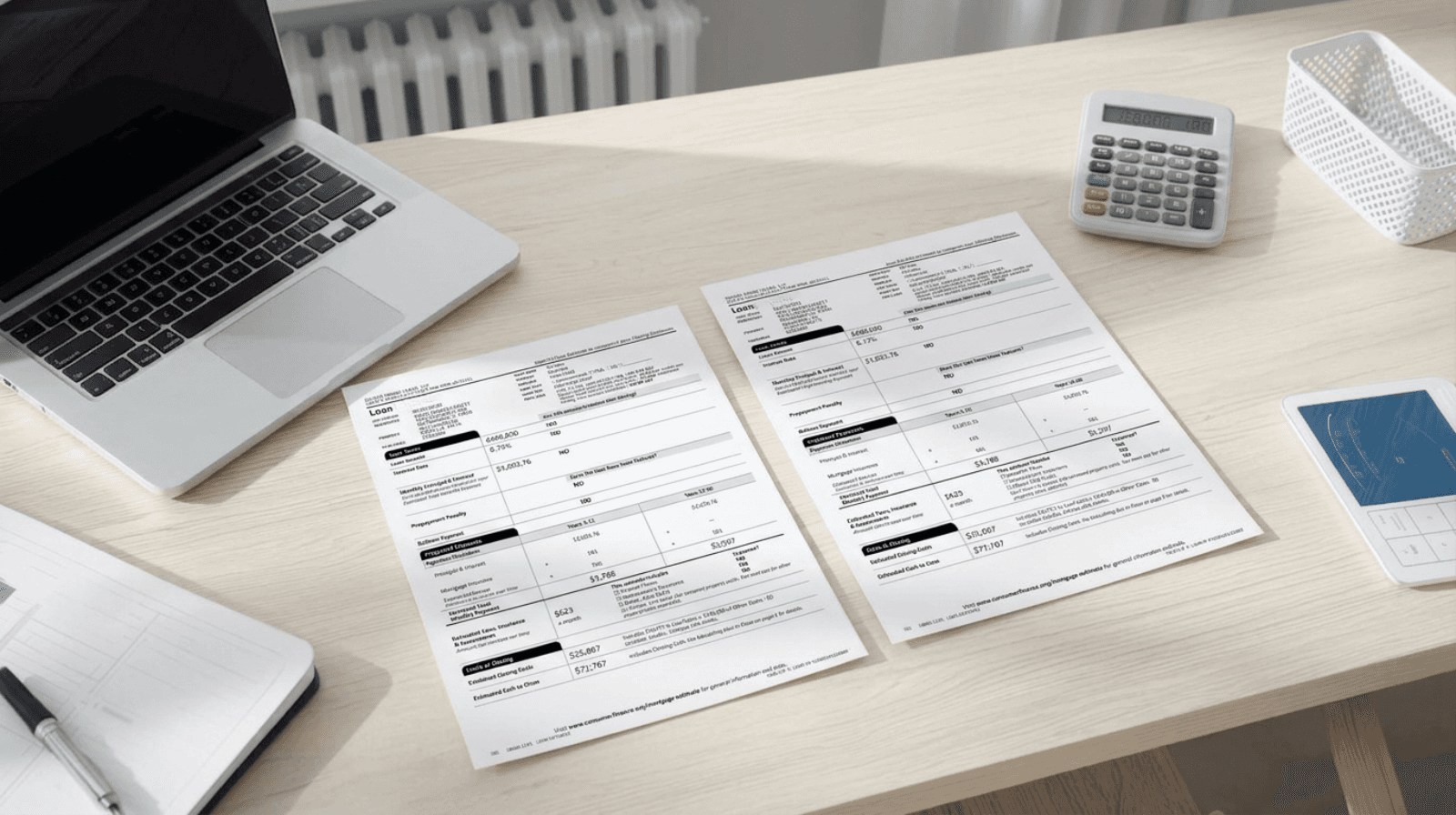

When homeowners look to refinance, they may have two options: traditional (or full-documentation) refinancing and streamline refinancing programs. Knowing the difference helps you choose the path that best fits your loan type, equity position, credit profile, and financial goals.
Short answer:
A traditional refinance involves full underwriting, income/asset verification, and, in most cases, an appraisal. A streamline refinance is a simplified path available only for specific government-backed loans (like Federal Housing Administration (FHA), U.S. Department of Veterans Affairs (VA), or United States Department of Agriculture (USDA)) and requires far less documentation and sometimes no appraisal.
This guide explains how each works, where they differ, when each makes sense, and how to choose between them.
✅ Key Takeaways
Traditional refinance: open to most borrowers; typically requires full documentation and an appraisal
Streamline refinance: only for existing FHA/VA/USDA loans; typically requires fewer documents, may not require an appraisal, and typically does not allow cash-out
Streamline may be faster and cheaper, but flexibility is limited (e.g., you often can’t switch loan types or take significant cash out)
Traditional refinances offer more flexibility (loan type changes, cash-out, term changes) but come with greater scrutiny and potentially higher costs
Choose based on your current loan type, equity, credit, and your goals (rate drop, cash-out, or term change)
💡 Pro Tip: Most borrowers assume a streamline is the best deal. In reality, streamline pricing can vary widely, and some lenders rely on that assumption to pad margins. The only way to ensure you have the most competitive deal for your situation is to compare offers.
🧭 What Is a Traditional Refinance?
Definition
A traditional (or full-documentation) refinance is when you replace your existing mortgage with a new one, which typically involves a full credit report, income verification, asset review, an appraisal of the home's value, and full underwriting. It applies to most conventional, FHA, VA, and USDA loans if you’re not using a streamline path.
Key Features
Open to any qualifying borrower/loan (subject to lender program)
You can switch loan types (e.g., FHA → Conventional)
You can do cash-out refinances with equity
Requires full documentation: income, assets, credit, and home appraisal
Underwriting standards are more stringent (especially if equity is low or credit is weaker)
Typical Uses
You want to cash out equity
You want to change the loan type (e.g., eliminate mortgage insurance)
You need major changes to the term, rate, or structure
You have good credit and equity, and want competitive rates and fees
Results vary by borrower.
🚀 What Is a Streamline Refinance?
Definition
A streamline refinance is a simplified refinancing option for borrowers who already have a qualifying government-backed loan (FHA, VA, USDA). It reduces documentation and, in some cases, appraisal requirements (based on lender approval).
Key Features
Available only to borrowers who already have a specific loan type (e.g., FHA → FHA, VA → VA)
Fewer paperwork requirements: often minimal or no income/asset verification (varies by lender)
Often, no new appraisal is required (depending on the program and lender)
Usually cannot take cash out (or only minimal cash out) because the goal is rate/term reduction
May be a faster process, depending on the lender
Typical Uses
You already have an FHA/VA/USDA loan
You want to lower your rate or convert from an ARM to a fixed-rate loan
You have limited equity or documentation and want a faster path
You don’t need to switch loan type or take cash out
🔍 Comparison: Traditional vs. Streamline
Feature | Traditional Refinance | Streamline Refinance |
Eligible loan types | Most mortgages (conventional, FHA, VA, USDA…) | Only existing FHA/VA/USDA loans |
Documentation required | Full income/asset/credit verification & appraisal (requirements vary by lender) | Reduced or waived income/docs, often no appraisal (depending on the lender) |
Ability to cash out | Yes – commonly available | Usually no or very limited cash-out |
Loan type switching | Yes (e.g., FHA → Conventional) | Typically, no (stay in the same program) |
Equity requirement | Depends on the program; often, equity is needed | More flexible, may allow low or negative equity |
Underwriting complexity | Higher | Lower |
Processing speed | Slower (30-45 days typical) | Faster (a few weeks or longer, depending on program) |
Best for | Major structural changes, cash-out goals | Speed, minimal docs, rate reduction |
Documentation requirements, appraisal waivers, and timelines vary by lender, borrower profile, and loan program.
💡Pro tip: Streamline and traditional refinance pricing varies between lenders, often by thousands of dollars over the loan term. Upload your Loan Estimate to Fincast and get competing offers from vetted lenders in minutes. No extra credit pull. Zero spam.
🧠 When to Choose a Traditional Refinance vs. Streamline
You May Want to Choose Traditional When:
You have enough equity and want to cash out or remove mortgage insurance
You want to change loan type (e.g., FHA → Conventional) or shorten your term
You can provide full documentation and want competitive long-term pricing
Choose Streamline When:
You already have an FHA, VA, or USDA loan.
You want to streamline and expedite the refinance process
You don’t need to take cash out, and don’t plan to switch loan programs
Your documentation is limited, or you prefer minimal hassle
💡Pro tip: Whether you choose a streamline refinance or use a traditional approach, calculate your break-even point for each offer you receive. The lowest rate doesn't always mean the best deal if closing costs eat up your savings in the first year.
⚠️ Things to Know & Limitations
Even though a streamline is easier, you still pay closing costs and must ensure the refinance provides a net tangible benefit (especially FHA/VA programs)
With a traditional refinance, you may incur higher costs due to appraisal, underwriting, and other fees.
If you use streamline but later want to switch programs or cash out, you may still need a full refinance
Always calculate your break-even point: ensure the upfront costs (traditional) or terms you accept (streamline) make sense for your time horizon
💡 Pro Tip: Your break-even point varies by loan offer. Calculate the break-even point for each offer and compare them to determine which option makes the most financial sense.
📋 How to Evaluate Your Offer & Compare
Determine your current loan type (FHA, VA, conventional)
Define your goal: rate reduction, term change, cash out, or loan type change
Ask your lender: Are you offering a streamline or full-doc refinance?
Review your Loan Estimates side by side: Look at the rate, term, and closing costs
Upload your Loan Estimate to Fincast: If you’d rather automate the benchmarking process, upload a single Loan Estimate to Fincast and allow vetted lenders to send offers that may compete with your original one
❓ FAQs
1. What’s the main difference between a streamline and a traditional refinance?
The documentation and eligibility. A streamline is for existing FHA/VA/USDA loans with minimal underwriting; a traditional is full doc and open to all borrowers.
2. Can I cash out with a streamline refinance?
Typically, no—streamlined programs usually prohibit or severely limit cash-out.
3. Do I always need an appraisal for a streamline refinance?
Not always. Many streamline programs waive the appraisal requirement, but the requirements vary by lender.
4. Is a streamline refinance faster than a traditional refinance?
It may be due to fewer docs, fewer steps, and often faster closings, but this varies by lender.
5. Which one costs less upfront?
Streamline often has lower hard costs due to fewer appraisal/underwriting steps, but you must compare your specific estimate to determine which makes the most financial sense.
6. Can I switch from FHA to Conventional using a streamline refinance?
No — that requires a traditional refinance (full doc). Streamline typically keeps you in the same loan type.
Bottom Line
The right refinance path depends on your current loan type, equity position, and financial goals. If you have an FHA, VA, or USDA loan and want to lower your rate with minimal paperwork, a streamline refinance may be your fastest option. If you need cash out, want to switch loan programs, or eliminate mortgage insurance, a traditional refinance gives you that flexibility.
Before you lock in any refinance offer, verify you’re getting competitive pricing. Even “simplified” refinances can vary by hundreds of dollars per month across lenders.
👉 Upload your Loan Estimate to Fincast. Vetted lenders compete for your loan—no extra credit pulls, no obligation. See if you can do better in under 2 minutes.
Disclaimer: Nothing in this content should be considered financial advice. The examples and data shared are for general information only and may not reflect your personal situation. We do not guarantee the accuracy or completeness of the information provided. Always do your own research and speak with a qualified financial advisor before making any financial decisions.
Ready to Save On Your New Mortgage?