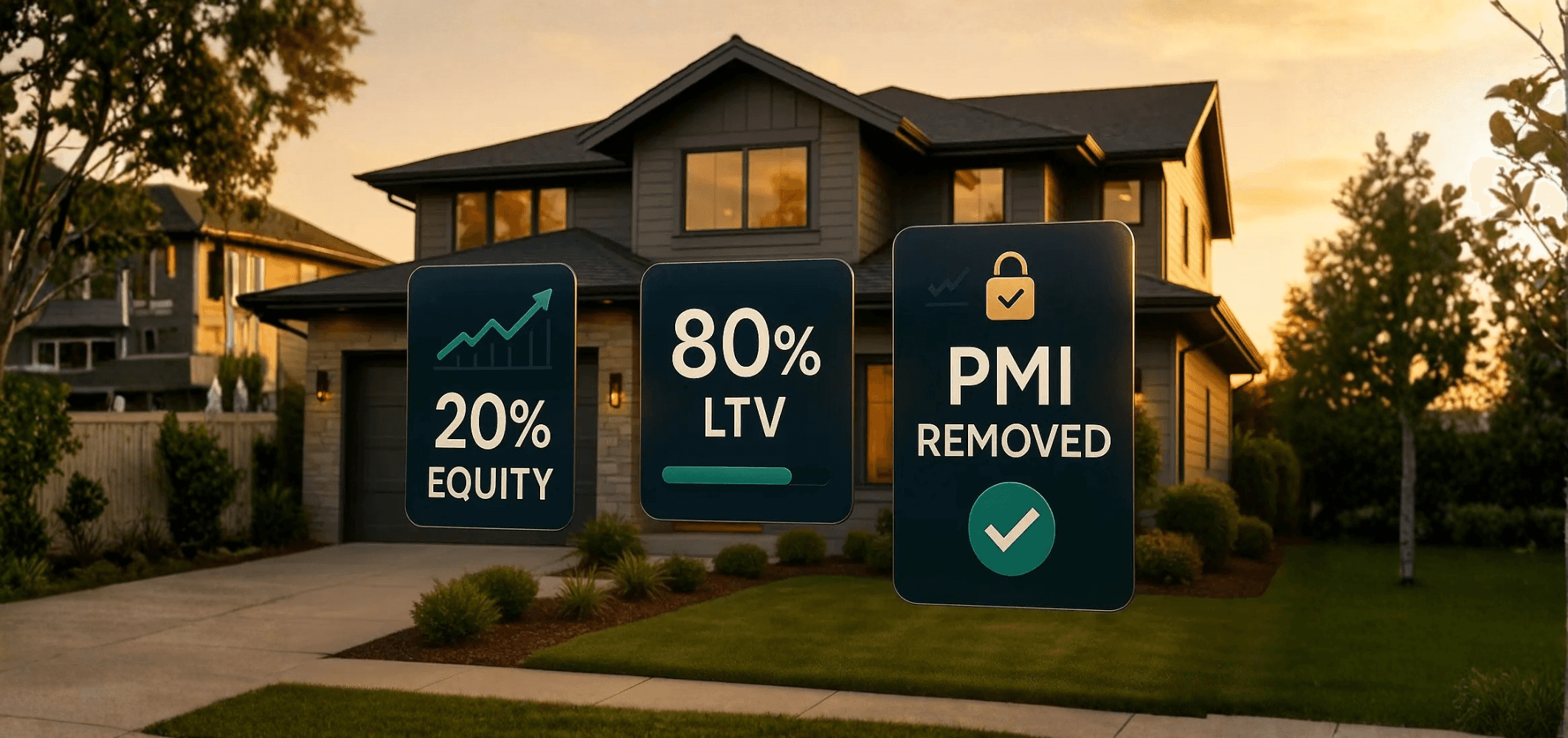
Reaching 20% equity in your home is one of the most important milestones for a homeowner — especially if you’re thinking about refinancing. At 20% equity (80% LTV), you unlock competitive refinance opportunities, including potentially lower rates, lower fees, and the ability to remove PMI entirely.
Short answer:
Yes, refinancing with 20% equity is not only possible — it’s often the ideal time to refinance. At 80% LTV, you gain access to stronger pricing, more lender competition, and the lowest PMI costs (or the ability to eliminate PMI), depending on your qualifications. This is the point where refinancing becomes substantially more cost-effective.
This guide explains refinancing with 20% equity, removing PMI, which loan programs offer competitive pricing, and how to benchmark any refinance offer to reduce the risk of overpaying.
Key Takeaways
Refinancing at 20% equity (80% LTV) unlocks competitive pricing tiers on conventional loans
PMI can typically be removed during a refinance if your LTV is 80% or less
Rates and lender fees may be much lower at 80% LTV vs higher LTV tiers
Appraisal strength matters: a strong appraisal can increase savings or remove PMI
Cash-out refinances may also be possible at 20% equity (though you must keep your LTV under 80% afterward)
💡 Pro Tip: Every lender prices loans differently. Be sure to shop around and get multiple quotes to compare, ensuring you choose the most competitive loan.
Why 20% Equity Is the Sweet Spot for Refinancing
At 80% LTV, you reach a major lender threshold. This is where potentially many pricing adjustments disappear or shrink significantly. This may mean:
✔ Better interest rates
✔ Lower PMI or complete PMI removal
✔ Lower lender fees
✔ More flexible approval
✔ More lender competition
✔ Higher likelihood of appraisal waivers
💡 Pro Tip: At 80% LTV, many homeowners assume their offer must be competitive. In reality, this is where lender pricing differences can quietly cost thousands, as what is considered competitive pricing varies by borrower.
Can You Remove PMI With 20% Equity?
Yes — this is the #1 reason homeowners refinance at 20% equity.
How it works:
If your appraisal confirms your LTV is 80% or less, you can:
Remove PMI from your new mortgage
Reduce your monthly payment
Improve your break-even point
Potentially save thousands in long-term interest and insurance costs
Example:
Loan amount: $350,000
PMI cost: $180/month
Savings from PMI removal: $2,160/year
Removing PMI alone often makes the refinance worthwhile.
Figures are for illustrative purposes only. Each borrower’s savings will vary.
Refinance Options With 20% Equity
1. Conventional Refinance
Conventional loans offer competitive pricing at 80% LTV.
This often includes:
PMI removal
No or limited LTV-based rate premiums
Lower lender fees
Stronger underwriting flexibility
Requirements:
620+ credit score (680–740+ recommended for best pricing)
DTI typically ≤ 45%
A supporting appraisal
Actual lender pricing varies by lender and borrower profile.
2. FHA Refinance
You can refinance an FHA loan, but even at 20% equity, FHA still requires MIP (mortgage insurance) unless you convert to a conventional loan.
Best use cases for FHA at 20% equity:
Credit scores are too low for conventional
Higher DTI ratios
Existing FHA streamline opportunities
Otherwise, most homeowners move from FHA → conventional to eliminate MIP.
3. VA Refinance
VA IRRRL (Streamline)
No equity requirement
Often no appraisal
Often closes fast
VA Cash-Out
At 20% equity, you may qualify for a VA cash-out refinance depending on lender overlays.
VA loans do not have PMI, so equity affects the rate less than in conventional loans — but still influences lender appetite.
4. Cash-Out Refinance at 20% Equity
Most loan programs and lenders allow a cash-out refinance if your LTV is below 80% after closing.
Example:
Home value: $500,000
Max allowed loan (80% LTV): $400,000
Current balance: $350,000
Available cash-out: ~$50,000
💡 Pro Tip: Cash-out rates are slightly higher than rate-and-term refinances due to the additional risk. Apply for a loan and upload the Loan Estimate you receive to Fincast so vetted lenders can compete for your business.
How 20% Equity May Improve Your Refinance Pricing
Interest Rates
80% LTV is the first “preferred” pricing tier for most lenders.
Rates vary by credit score and debt-to-income ratio, but 20% equity gives you a strong starting position.
PMI Removal = Major Monthly Savings
Once PMI is removed, your monthly payment can drop by:
Approximately $100–$300 on typical loan amounts
Thousands per year over the life of the loan
This significantly shortens your break-even timeline.
PMI pricing varies by borrower profile.
Better Odds of an Appraisal Waiver
High equity increases your chances of receiving a PIW (Property Inspection Waiver), which:
Can save you approximately $500–$900 (varies by location)
Removes appraisal risk
Speeds up the refinance
When Refinancing May Make the Most Sense at 20% Equity
Every borrower has different qualifications, which means different pricing and eligibility, but refinancing at 20% equity may make sense if:
✔ You want to remove PMI
✔ You want to try for a better interest rate
✔ You plan to stay in the home for 2–5+ years
✔ You’re switching from FHA to conventional
✔ You want to reduce total interest paid
✔ You want to refinance into a 15-year loan
When It May Make Sense to Wait
Consider waiting if:
You’re extremely close to qualifying for lower pricing (e.g., rising home values)
Your credit score will improve soon
You’re planning to move within 1–2 years
Your break-even exceeds your time horizon
💡 Pro Tip: Not sure if refinancing makes sense for you? Consider applying for a refinance with your chosen lender to see what they offer. Then compare your options from vetted lenders by uploading your Loan Estimate to Fincast to get anonymous competitive bidding.
How to Strengthen Your Refinance at 80% LTV
1. Maximize Appraisal Value
Small improvements can help push your LTV even lower:
Landscaping
Paint and lighting
Decluttering
Documenting recent comparable sales
2. Improve Your Credit Score
Higher equity + higher credit = potentially competitive pricing
3. Lower Your DTI
The less debt you have, the more it may improve underwriting ease and rate competitiveness.
4. Compare Lenders
Lenders price 80% LTV differently:
Some offer large lender credits
Some markup rates
Some inflate the PMI removal timing
Some include unnecessary points
This is exactly why benchmarking matters. Shopping around on your own can be time-consuming and frustrating, but getting multiple quotes is essential to saving money.
How Fincast Helps
Even at 80% LTV — where pricing is often competitive — lenders vary widely in both rate and fees. Some underprice aggressively; others rely on borrowers not comparison shopping.
Fincast helps you compare options and choose the right loan confidently.
How it works:
Upload your Loan Estimate
Fincast analyzes your pricing
Vetted lenders compete to beat your offer
You choose the best deal
💡 Pro Tip: At 20% equity, even small pricing differences can save thousands over the life of the loan.
FAQs: Refinancing With 20% Equity
1. Can I remove PMI when refinancing at 20% equity?
Yes, most borrowers can — this is the primary benefit of refinancing at 80% LTV.
2. Is refinancing cheaper at 20% equity?
Rates and fees may be lower at 20% equity, but it depends on the lender and borrower profile.
3. Can I do a cash-out refinance at 20% equity?
Only if you remain at or below 80% LTV after taking the cash-out.
4. Do I need an appraisal at 80% LTV?
It varies by lender and borrower qualifications, but your chances may be higher than at higher LTVs.
5. What loan type is best with 20% equity?
Conventional loans typically offer the best pricing and allow PMI removal, but evaluating all of your options is the best way to make the right decision for your financial situation.
6. How do I know if my lender’s offer is competitive?
Upload your Loan Estimate to Fincast for real-time benchmarking.
Bottom Line
Refinancing with 20% equity is often the ideal time to refinance. You may get better pricing, have more flexibility, and the ability to remove PMI, one of the biggest monthly savings opportunities for homeowners. Whether you’re aiming to lower your payment, reduce long-term interest, or switch loan types, 80% LTV may unlock the most valuable refinance options.
👉 At 80% LTV, even small pricing differences can cost you thousands. Rate locks typically last 30-60 days. Upload your Loan Estimate within 48 hours of receiving your LE to increase your chances of receiving competitive bids.
This blog is for educational purposes only and not financial or legal advice. Consult with a licensed mortgage professional for personalized guidance.
Disclaimer: Nothing in this content should be considered financial advice. The examples and data shared are for general information only and may not reflect your personal situation. We do not guarantee the accuracy or completeness of the information provided. Always do your own research and speak with a qualified financial advisor before making any financial decisions.
Ready to Save On Your New Mortgage?