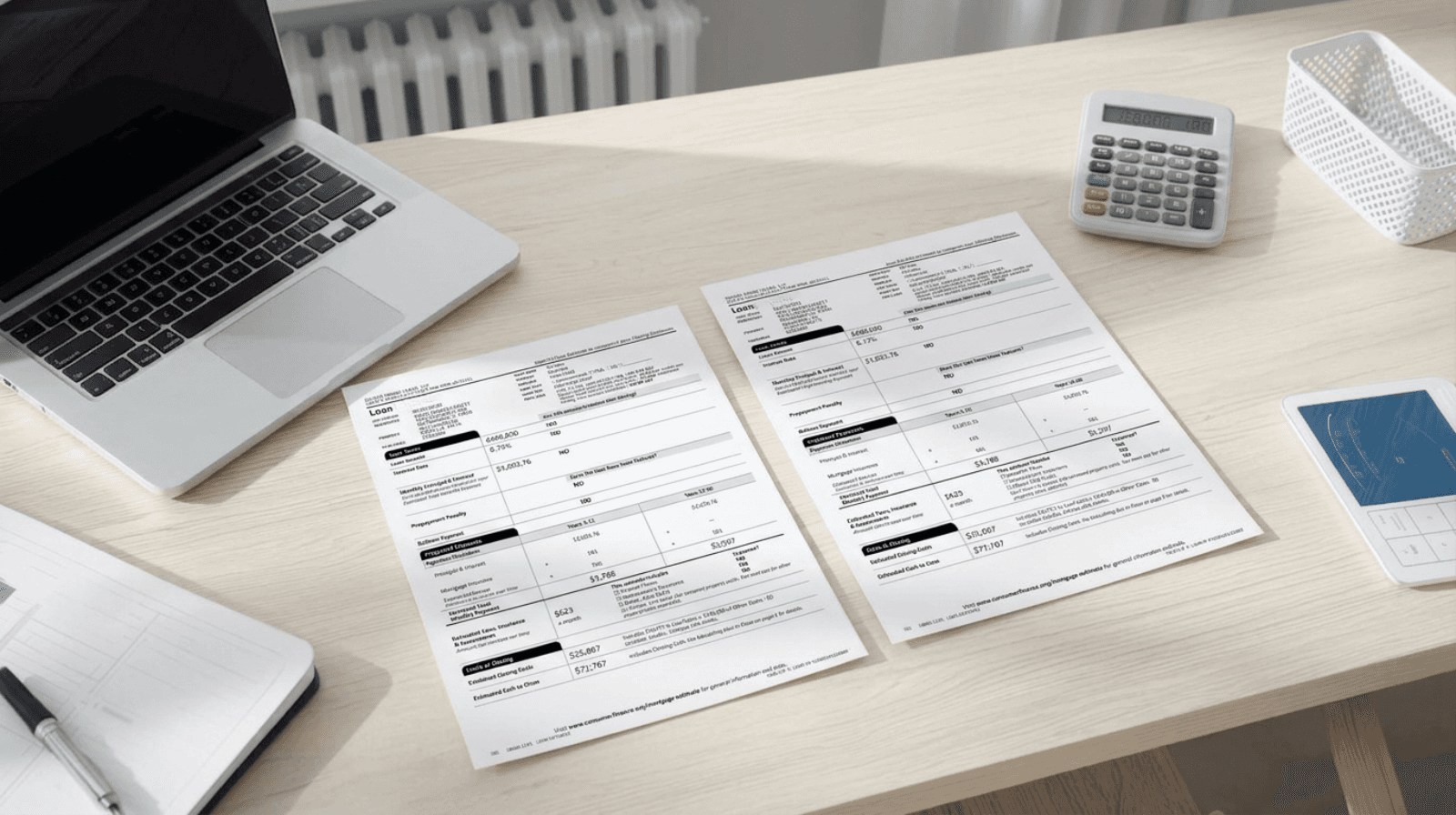

Lowering your interest rate through refinancing doesn’t just reduce your monthly payment — it can also significantly reduce the total interest paid over the life of your loan.
These long-term savings are one of the most powerful (and overlooked) reasons to refinance. Many homeowners focus only on monthly savings, but the true financial impact comes from how much interest you stop paying once you have a lower rate.
This guide shows you how to calculate your total interest savings, including formulas, step-by-step instructions, and real examples for common rate drops.
Key Takeaways
✅ Total interest savings = interest at old rate – interest at new rate
✅ A 1% rate reduction can save tens of thousands of dollars over the life of a loan, depending on the loan size and term
✅ Even a 0.5% drop produces meaningful long-term savings, depending on the loan amount
✅ Savings grow significantly with larger loan balances and early-payoff strategies
What Are Total Interest Savings?
Your total interest savings represent the amount of interest you avoid paying over the life of your mortgage by refinancing into a lower rate or shorter term.
✅ Monthly savings improve cash flow
✅ Total interest savings improve long-term savings
These savings can be significant — especially early in your mortgage when a large part of your payment goes toward interest.
💡 Pro Tip: Total interest savings matter even if your monthly payment drops only a little. The long-term benefits often matter far more.
How to Calculate Total Interest Savings (Formula)
You only need two numbers:
1️⃣ Total interest you’d pay at your current rate
2️⃣ Total interest you’d pay at your new refinance rate
Then subtract:
Savings=Interest at Old Rate−Interest at New Rate
Any amortization calculator can generate these totals — or your lender can provide them.
Total Interest Savings Calculator (Quick Reference)
Here’s how much interest you pay over 30 years at common mortgage rates.
Total Interest Paid Over 30 Years
Loan Amount | 7% Rate | 6% Rate | 5% Rate |
$300,000 | $418,527 | $347,515 | $279,767 |
$400,000 | $558,036 | $463,354 | $373,022 |
$500,000 | $697,545 | $579,193 | $466,277 |
Now compare:
Interest Savings When Refinancing
Rate Drop | $300k Loan | $400k Loan | $500k Loan |
7% → 6% | $71,012 | $94,682 | $118,352 |
6.5% → 6% | $35,312 | $47,082 | $58,852 |
6% → 5% | $67,748 | $90,332 | $112,916 |
These examples assume a new 30-year fixed-rate loan and are for educational illustration only. Actual interest costs depend on loan terms, lender pricing, credit profile, and market conditions. Estimates exclude taxes, insurance, and HOA costs, which may affect your actual monthly payment. Results assume the loan runs for the full term. Actual savings depend on how long you keep the loan.
💡 Pro Tip: Bigger loans = bigger interest savings. Even a small rate drop becomes much more valuable at higher loan amounts.
Real Examples: Total Interest Savings
Example 1: 7% → 6% on a $300,000 Loan
Interest at 7%: $418,527
Interest at 6%: $347,515
📉 Total Interest Saved = $71,012
Even if closing costs are $6,000, your net savings are still significant.
Example 2: 6.5% → 6% on a $400,000 Loan
Interest at 6.5%: $510,436
Interest at 6%: $463,354
📉 Total Interest Saved = $47,082
Small rate drop, large long-term benefit.
Example 3: 6% → 5% on a $500,000 Loan
Interest at 6%: $579,193
Interest at 5%: $466,277
📉 Total Interest Saved = $112,916
That’s over $100k in interest avoided.
Why Total Interest Savings Matter More Than Monthly Savings
Monthly savings increase cash flow, while total interest savings support long-term savings.
Here’s why total interest savings can be more impactful:
1. They compound with time
You save more the longer you stay.
2. Early-term refinances may save more interest
In a standard amortizing mortgage, a larger share of early payments goes toward interest, especially in the first half of the loan term.
3. Savings build equity faster
Lower rates mean more of each payment reduces your balance.
4. You free up future cash flow
Less interest → more equity → more options.
💡 Pro Tip: A refinance with small monthly savings can still generate huge total interest savings — that’s where the real value lies.
Factors That Increase Your Total Interest Savings
✔️ Bigger loan balances
$500k+ loans generate significant reductions even with small rate drops.
✔️ Bigger rate drops
A full 1% reduction can save six figures, depending on the loan amount.
✔️ Refinancing early
The earlier you refinance, the more interest you avoid in the future.
✔️ Shorter loan terms (15 or 20 years)
The less time you borrow the funds for, the less interest you pay overall.
✔️ Making extra principal payments
A lower rate means each extra dollar you pay reduces the principal further.
Factors That Reduce Your Total Interest Savings
❌ Refinancing late in your mortgage
You’ve already paid most of your interest.
❌ Taking cash out
Raises your balance → increases total interest.
❌ Rolling closing costs into the loan
Your principal grows, reducing savings.
❌ Minimal rate drops
Rate reductions below about 0.25% often produce limited savings, though the impact depends on the loan size and closing costs.
How to Calculate Your Total Interest Savings (Step-by-Step)
Step 1: Get your current loan information
Remaining balance
Current rate
Years left
Step 2: Calculate total interest at your current rate
Use an online amortization calculator.
Step 3: Calculate total interest at your new refinance rate
Use your refinance quote or Loan Estimate.
Step 4: Subtract the two
This gives your total interest savings.
Step 5: Subtract closing costs
This shows your net savings.
When Total Interest Savings Should Drive Your Refinance Decision
Refinancing mainly for interest savings makes sense if:
✔️ You plan to stay long-term
The longer you stay, the more interest you avoid.
✔️ Your loan balance is large
Even a small drop produces outsized savings.
✔️ You’re in the early stages of your mortgage
More interest avoided = bigger total savings.
✔️ You want to build long-term savings
Less interest → more equity → more money saved.
When Total Interest Savings Are Less Important
Refinancing for interest savings may not be ideal if:
❌ You plan to move in 1–3 years
There typically isn’t enough time to benefit.
❌ You’re deep into your mortgage
Interest is already low on amortization.
❌ You need monthly savings more than long-term savings
Cash flow may matter more right now.
How Fincast Helps You See Your Total Interest Savings Clearly
Lenders usually show you:
Your monthly payment
Your rate
A few fees
But they rarely show:
Your total interest over 30 years
Your true interest savings
APR impacts
Hidden lender fees
Loan comparisons
Fincast helps you see whether your refinance offer is actually competitive.
1️⃣ Upload your Loan Estimate securely
2️⃣ Vetted lenders review the deal
3️⃣ Some may present alternative offers
4️⃣ You compare your options — no extra credit pulls, no spam calls
Even a small improvement in rate or fees can add tens of thousands in interest savings.
FAQs: Total Interest Savings From Refinancing
1. How do I calculate total interest savings?
Subtract the total interest at your new rate from the total interest at your old rate.
2. Do monthly savings equal interest savings?
No, the amount you save is based on the loan's full amortization.
3. How much interest can refinancing save?
Often $40,000–$150,000+, depending on rate drop and loan size.
4. Does refinancing to a shorter term save more interest?
Yes, 15- and 20-year loans reduce the total interest paid because you pay the loan off faster.
5. Do closing costs affect total interest savings?
No, but they affect your net savings.
6. Does removing PMI affect interest savings?
No — PMI affects your monthly payment, not interest.
Bottom Line
Refinancing to a lower interest rate can significantly reduce the total interest paid over the life of your mortgage. These long-term savings often exceed the monthly payment reduction many homeowners focus on. The key is making sure the interest savings outweigh the closing costs and that you plan to keep the loan long enough to benefit.
👉 See your real refinance interest savings. Upload your Loan Estimate to Fincast, and vetted lenders may review your deal and present alternative refinance offers. Compare rates, fees, and loan terms — without extra credit pulls or spam calls.
Disclaimer: Nothing in this content should be considered financial advice. The examples and data shared are for general information only and may not reflect your personal situation. We do not guarantee the accuracy or completeness of the information provided. Always do your own research and speak with a qualified financial advisor before making any financial decisions.
Ready to Save On Your New Mortgage?