Refinancing from 7% to 5.5% is a big rate drop. A 1.5% rate reduction may not sound huge — but in mortgage math, it’s significant.
For many homeowners, shaving 1.5% off their rate can lower their monthly payment by $300–$500 or more and save well over $100,000 in long-term interest, depending on their loan size.
This guide breaks everything down clearly — using simple calculators, real-world examples, and a step-by-step break-even test so you can see exactly how much savings a 7% → 5.5% refinance could unlock.
Let’s dive in.
Key Takeaways
✅ Refinancing from 7% to 5.5% typically saves $250–$500 per month on a $300k–$500k loan over a 30-year term
✅ Lifetime interest savings can exceed $120,000 on larger loans
✅ Closing costs matter — most refinances cost 2–5% of the loan amount
✅ Your break-even point reveals whether the refinance truly pays off
How Much Will You Save Dropping From 7% to 5.5%? (Quick Calculator)
Below is a quick comparison of monthly payments for a 30-year fixed mortgage.
Monthly Payment Comparison: 7% vs. 5.5% (30-Year Fixed)
Loan Amount | Payment at 7% | Payment at 5.5% | Monthly Savings |
$250,000 | $1,663 | $1,419 | $244/mo |
$300,000 | $1,996 | $1,703 | $293/mo |
$400,000 | $2,661 | $2,271 | $390/mo |
$500,000 | $3,327 | $2,839 | $488/mo |
Principal & interest only, assuming a new 30-year term.
💡 Pro Tip: The higher your loan balance, the more impactful each rate drop becomes — even small improvements compound over thousands of payments.
Total Interest Saved Over 30 Years (7% → 5.5%)
Here’s how much interest you’d save by refinancing into a new 30-year loan:
Loan Amount | Interest at 7% | Interest at 5.5% | Lifetime Savings |
$300,000 | ~$418,527 | ~$313,514 | $105,013 saved |
$400,000 | ~$558,036 | ~$418,018 | $140,018 saved |
$500,000 | ~$697,545 | ~$522,522 | $175,023 saved |
These long-term savings remain significant even after closing costs.
These examples assume a new 30-year mortgage and show principal and interest only. Actual savings vary based on your remaining loan balance, loan term, taxes, insurance, and lender pricing.
Does a 1.5% Rate Drop Always Lead to Major Savings?
Often, but not always. But your actual savings depend on:
1. Your remaining loan balance
Higher balance = bigger savings.
2. Your loan term reset
Restarting a 30-year term increases monthly savings but may increase long-term interest unless you prepay.
3. Whether you currently pay PMI
Lower rates + rising home values may allow you to remove PMI, boosting savings even more.
4. Your credit profile
A strong credit score could provide access to lower rates.
💡 Pro Tip: Before deciding if a 1.5% rate drop is worth it, upload your Loan Estimate to Fincast. You can see your true savings, break-even, and whether vetted lenders have different offers — no extra credit pull and no spam.
How to Calculate Your Personal Savings (Simple Formula)
You can estimate your savings in minutes.
Step 1: Find your current principal & interest payment
Step 2: Calculate your payment at 5.5%
Use:
Current balance
30-year term
5.5% rate
Step 3: Subtract to find your monthly savings
Monthly Savings = Old Payment – New Payment
Step 4: Estimate closing costs
Most refinances cost 2–5% of the loan amount
Step 5: Calculate your break-even timeline
Break-Even (Months) = Closing Costs ÷ Monthly Savings
If the break-even point is under 36 months, it’s usually a strong refinance.
Real Example: Savings on a $400,000 Refinance
Current loan: $400,000 at 7%
New rate: 5.5%
Closing costs: $7,500
Loan term: 30 years
Monthly Savings:
7% → $2,661/mo
5.5% → $2,271/mo
Savings = $390 per month
Break-Even:
$7,500 ÷ $390 ≈ 19 months
If you’ll stay in the home for 2+ years, refinancing will likely benefit you.
💡 Pro Tip: Some lenders may adjust pricing when they know you’re comparing offers — always compare your Loan Estimate before committing.
7% → 5.5% Refinance: Who Benefits the Most?
You’ll likely benefit if:
✔️ Your loan balance is $300k+
Savings scale with loan size.
✔️ You have strong equity (LTV ≤ 80%)
This avoids PMI and improves pricing.
✔️ Your credit score is improving
Better credit = better-than-advertised rates.
✔️ You plan to keep the home long enough to beat your break-even point
For many, that’s as little as 18–24 months.
✔️ You currently pay PMI
Refinancing + increased home value might help remove it.
💡 Pro Tip: Even if you restart your 30-year term, you can continue paying your old payment amount to cut years off your mortgage without changing your monthly budget.
Step-by-Step: Should You Refinance From 7% to 5.5%?
Follow this simple process:
Step 1: Calculate your monthly savings with a 5.5% rate
Use a reputable online mortgage calculator.
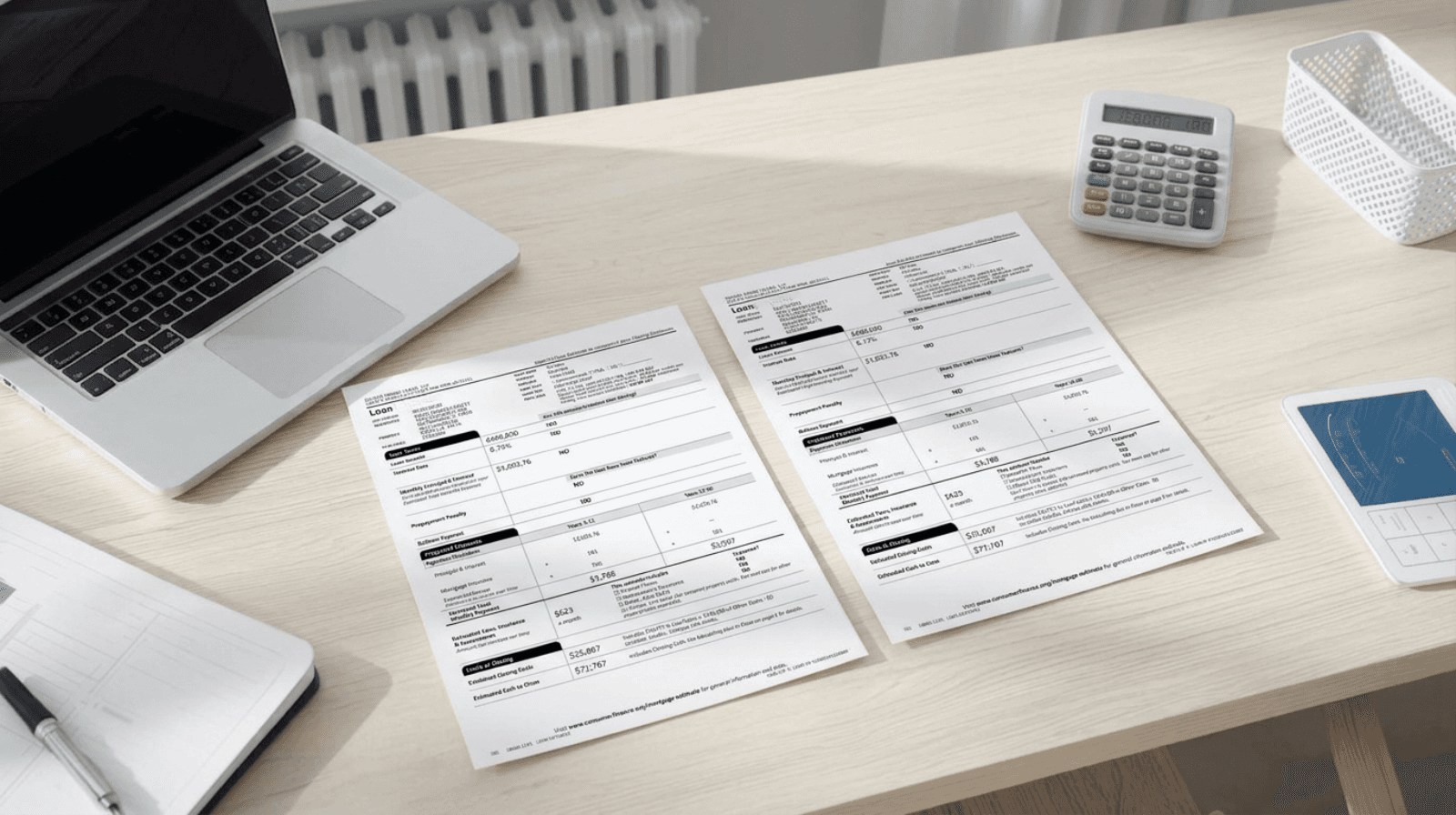
Step 2: Request a Loan Estimate (LE) from a lender
You’ll get it within 3 business days.
Step 3: Review closing costs carefully
Section A shows lender fees, where pricing varies the most.
Step 4: Do the break-even test
If break-even < 36 months and you’ll remain in the home for at least that long, it may be a strong deal.
Step 5: Compare multiple lenders
Rate spreads of 0.25%–0.50% are common and can double your savings.
Step 6: Upload your Loan Estimate to Fincast to benchmark your deal
You can compare your Loan Estimate against other lender offers.
Avoid These Common Mistakes When Refinancing From 7% to 5.5%
❌ Only looking at the interest rate
APR reveals the true cost, including fees.
❌ Restarting the 30-year term without a payoff strategy
Continue paying extra to avoid unnecessary long-term interest.
❌ Ignoring PMI impacts
Refinancing can remove — or trigger — PMI.
❌ Not comparing Loan Estimates
Lenders often assume you won’t check.
❌ Waiting for rates to fall even further
If savings outweigh costs today, waiting could mean missing out on months of savings.
How Fincast Helps You Maximize Savings on a 5.5% Refinance
Fincast helps you determine whether your refinance is worth it — using your real numbers to help you make confident decisions.
Here’s how:
1️⃣ Upload your Loan Estimate securely
2️⃣ Vetted lenders review the deal
3️⃣ Some may present alternative offers
4️⃣ You compare your options — no extra credit pulls, no spam calls
Even a small change in rates or fees can significantly reduce your break-even point and boost long-term savings.
FAQs: Refinancing from 7% to 5.5%
1. Is refinancing from 7% to 5.5% worth it?
For many homeowners with larger loan balances, it often works well. Monthly savings often reach $300–$500, and lifetime interest savings can exceed six figures.
2. How long will it take to break even?
Most homeowners break even in 18–30 months, depending on loan size and closing costs. Calculating your break-even point will help you determine it.
3. Will refinancing restart my mortgage?
Not necessarily — you can choose a shorter term or simply keep paying your old payment amount to stay on track.
4. Do I need excellent credit to get 5.5%?
A strong credit score helps, but many borrowers qualify with mid-to-high 600s, depending on DTI and equity.
5. Can I refinance again if rates drop further?
Yes — as long as the new savings outweigh the new closing costs.
6. Will PMI affect my savings?
Absolutely. Removing PMI through a refinance can significantly increase your monthly savings.
The Bottom Line: A 7% → 5.5% Refinance Can Be Powerful
A 1.5% mortgage rate drop can significantly change the math of your loan.
For many homeowners, refinancing from 7% to 5.5% could mean:
• $250–$500 lower monthly payments
• $100,000+ in long-term interest savings on larger loans
• Possible PMI removal if your equity has increased
But the key decision isn’t just the new rate.
It’s whether the entire refinance offer — rate, fees, and break-even timeline — truly improves your financial position.
Two lenders offering the same rate can still differ by thousands of dollars in fees or pricing adjustments.
That’s why comparing Loan Estimates before committing can be so important.
👉See if your refinance offer is actually competitive. Small differences in lender pricing can dramatically change your savings. Instead of applying with multiple lenders, Fincast lets you upload your existing Loan Estimate and see how it compares. Upload your Loan Estimate to Fincast to see how your refinance offer stacks up.
Rates, payment examples, and savings estimates are for educational purposes and may vary based on credit score, loan type, equity, and lender pricing.
Disclaimer: Nothing in this content should be considered financial advice. The examples and data shared are for general information only and may not reflect your personal situation. We do not guarantee the accuracy or completeness of the information provided. Always do your own research and speak with a qualified financial advisor before making any financial decisions.
Ready to Save On Your New Mortgage?