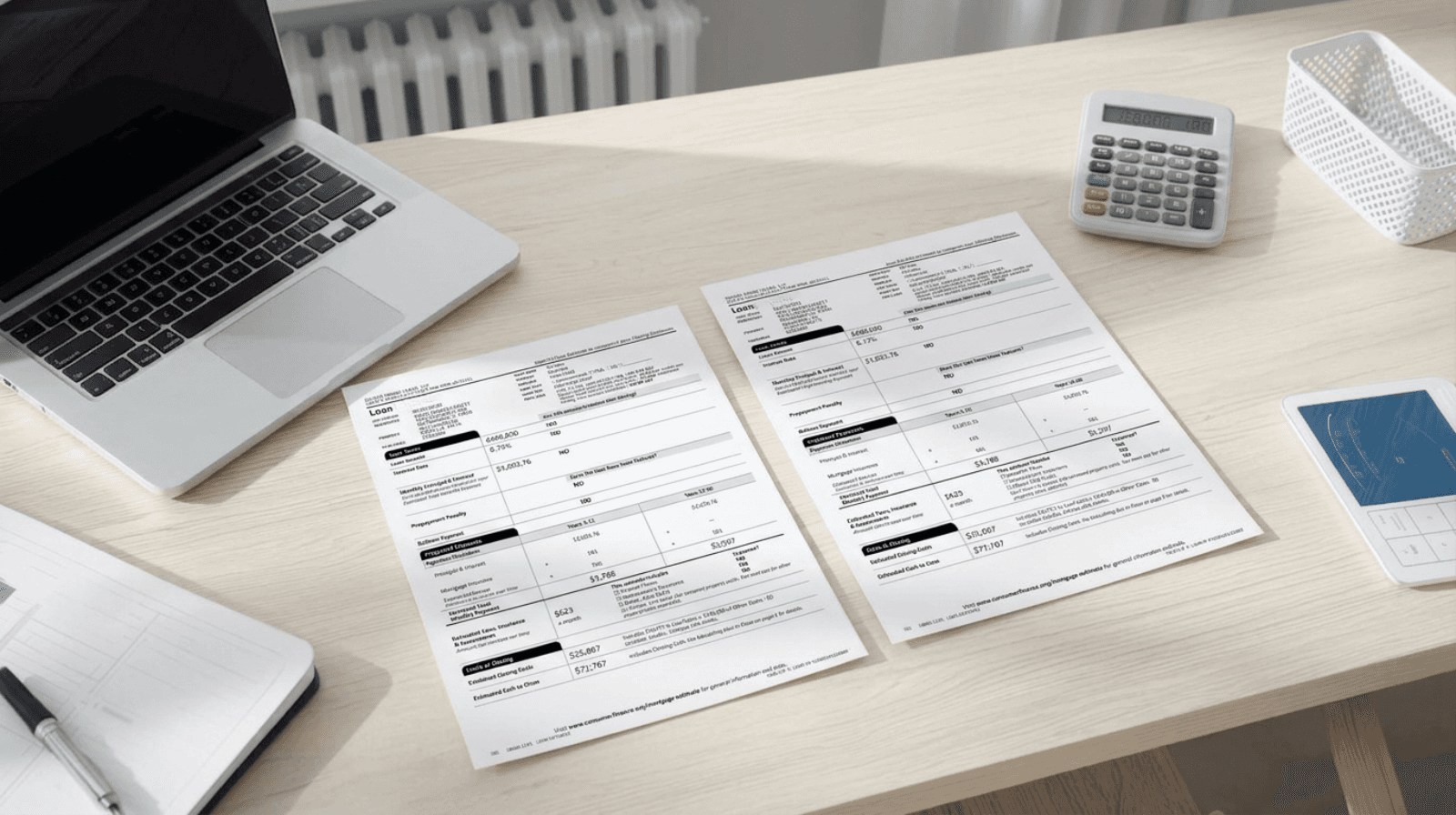

A 680 credit score puts you in a strong — but not top-tier — position to refinance your mortgage. You’re well above the minimum for all major loan programs, including conventional, FHA, and VA, and you’re close to some key pricing thresholds that unlock better rates and lower fees.
The truth?
A 680 score may qualify you for excellent refinance options, and your pricing may be significantly better than borrowers in the mid-600s — but still slightly below the elite tiers (700+ and 740+).
This guide explains what refinancing looks like with a 680 credit score, which loan programs may be available, what fees you can expect, and how close you are to jumping into the next-best pricing tier.
Key Takeaways
You can typically refinance with a credit score of 680 and access competitive rates
680 is above the minimum for conventional, FHA, VA, and even some jumbo loans
Your pricing may be solid at 680, but you may see meaningful improvements at 700 or 720
Cash-out refinances may be widely available at 680
Comparing lenders is critical — pricing spreads are large at this mid-high tier
💡 Pro Tip: Because lender pricing can vary widely even for the same loan and borrower, it’s important to get multiple offers and compare them side by side.
Can You Refinance with a 680 Credit Score?
A 680 credit score qualifies for nearly every refinance loan type, including:
Conventional rate-and-term
Conventional cash-out
FHA rate-and-term
FHA cash-out
VA IRRRL
VA cash-out
Some jumbo refinances
A 680 score is considered “good,” offering strong approval odds and reasonable pricing.
💡 Pro Tip: Pricing can vary significantly for the same loan. You’ve worked hard to build your credit score; make sure you reap the benefits by getting competitive loan terms.
Loan Programs Available at a 680 Credit Score
Here’s how each loan type treats a 680 score.
Conventional Refinance Options at 680
A 680 score places you in the mid-high range for conventional loans, opening up strong refinance opportunities.
Conventional Rate-and-Term Refinance
A 680 credit score often makes it easier to get approved for a conventional rate-and-term refinance, depending on your other qualifying factors.
PMI-Removal Refinance
If your LTV is below 80%, a 680 score qualifies for moderate PMI pricing — not the lowest, but cheaper than the 640–660 tiers.
Conventional Cash-Out Refinance
Cash-out refinances pose a higher risk to lenders, so many require higher credit scores, often 660+, sometimes 680+, depending on the loan size.
FHA Refinance Options at 680
Because the FHA allows scores as low as 580 for FHA loans, your 680 score puts you well into the “preferred” pricing zone for some lenders.
FHA Rate-and-Term Refinance
A 680 credit score often makes it easy to qualify for an FHA rate-and-term refinance.
FHA Streamline Refinance
If you already have an FHA loan, you may qualify for an FHA streamline refinance, which allows:
No appraisal (usually)
No income verification
Minimal documentation
Faster approvals
Every lender has different requirements for this program, but a credit score of 680 should be safe.
FHA Cash-Out Refinance
Most lenders require a credit score of 620–640 minimum for an FHA cash-out refinance. A higher credit score may make it easier to qualify, as long as your other qualifying factors meet the requirements.
Is FHA Cheaper Than Conventional at 680?
Every lender’s pricing differs, but FHA may be cheaper in some circumstances, such as:
Your LTV is above 80%
You have moderate PMI pricing
You don’t want to pay discount points
But long-term mortgage insurance premium costs should be considered.
💡 Pro Tip: You’ve spent months working on your credit score. A bad refinance offer can erase those gains. Before you sign, verify your pricing matches your credit scores.
VA Refinance Options at 680
VA loans offer flexible credit requirements, but they can vary by lender.
VA IRRRL (Streamline)
If you already have a VA loan, you may be eligible for a VA streamline refinance if you become eligible for a lower rate or another tangible benefit. The requirements vary by lender, but the VA has no credit score requirement, and many lenders accept scores of 580–620.
VA Cash-Out Refinance
Cash-out refinances increase lenders' risk, so they often require higher credit scores. By contrast, VA loans tend to be more flexible, with many lenders accepting scores of 620-640, so 680 could be a safe bet.
Jumbo Refinance Options at 680
Jumbo loans pose an even higher risk to lenders, so they often require higher credit scores, often 680–700+ minimum.
So at 680:
You are barely at the threshold
Some lenders may approve
Others will require 700+
Your approval odds depend on:
LTV
Reserves
Income stability
Property type
If you’re at 680 and applying for a jumbo, shopping around is critical.
How a 680 Score May Affect Lender Fees
At 680, lender fees and pricing adjustments are moderate.
Expect:
Fewer risk-based pricing hits
Lower PMI costs than borrowers with 620–660 credit scores
Fewer required discount points
More competitive lender credits
Typical Fee Difference Example
Borrower at 680:
May need 0–0.5 points to access certain rates
Borrower at 620:
May need 1–2 points
Borrower at 740:
May need 0 points
These numbers are for illustrative purposes only and are not indicative of rates/fees you may get.
💡 Pro Tip: If you’ve worked hard and hit a 680+ credit score, don't lose your good pricing to a 0.25% rate markup that shouldn't exist. Before signing, upload your Loan Estimate to Fincast to ensure you have a competitive offer.
How a 680 Credit Score Affects PMI
If refinancing conventionally with an LTV >80%, PMI rates improve significantly at 680 vs 620, but they won’t be as low as 720+ borrowers.
If PMI is expensive, FHA may offer cheaper monthly payments — depending on loan size and MIP duration.
When Refinancing at 680 May Make Sense
Refinancing at a 680 credit score is a smart move when:
1. Rates are lower than your current loan
Even with slight pricing adjustments, you can save money monthly and over the loan term.
2. You want to consolidate high-interest debt
Taking cash out of your home’s equity to pay off high-interest debt may save you money in the short and long-term.
3. You’re eliminating PMI
Going from >80% LTV to <80% may significantly reduce monthly costs.
When You Might Wait to Refinance
It may make sense to improve your score if:
1. You’re very close to 700 or 720
These are critical pricing thresholds.
2. Lenders are requiring discount points
Improving your score may eliminate those points.
3. You plan to do a jumbo refinance
Bumping from 680 to 700 could open more options and lower pricing.
How to Improve a 680 Score
If you want to push into the next pricing tier:
1. Reduce revolving utilization
Try to lower your credit utilization rate to 30% or less of your available credit lines.
2. Avoid new inquiries
No new credit before refinancing, as each inquiry lowers your credit score and increases the riskiness of your refinance.
3. Pay all bills on time
Even a single late payment can significantly damage your credit score.
4. Remove reporting errors
Credit reports often contain errors. Disputing inaccuracies may yield fast improvements.
5. Keep older accounts open
The older your credit history is, the better it is for your credit score. Even if you have accounts you don’t use, keep them open to benefit from their older age.
Improving your credit score is a personal journey. These suggestions may help, but focusing on your individual credit history and what’s holding your score back is essential.
Why Comparing Lenders Matters Even More at 680
At this credit tier, lenders are inconsistent. Some lenders may have pricing adjustments, while others may not. There may also be significant differences in requirements, especially for cash-out refinances.
Because you’re on the cusp of higher pricing tiers, rate and fee differences can be huge between lenders.
💡Pro tip: Two lenders could analyze the same score and produce different offers. This is exactly where Fincast gives homeowners a significant advantage. Upload a single Loan Estimate and get competing offers to see where your offer stands.
How Fincast Helps
Mid-high credit borrowers often pay more than they need to simply because lenders assume they won’t comparison shop.
Fincast changes that. All you need to do is apply with a single preferred lender and receive your Loan Estimate.
How it works:
1. Upload your Loan Estimate
No new credit pull.
No new application.
2. Fincast analyzes your credit-based pricing
It evaluates:
Rate
Fees
Points
Credits
PMI
Closing costs
Cash-to-close
3. Vetted lenders anonymously compete to beat your offer
You stay anonymous and potentially receive multiple competing offers.
4. You get transparent comparisons
If your deal is great, Fincast confirms it. If not, you’ll see your potential savings immediately.
FAQs: Refinancing with a 680 Credit Score
Can I do a conventional refinance at 680?
Many lenders approve borrowers with credit scores of 680 or higher.
Can I qualify for cash-out at 680?
Every lender has different requirements, but many set a minimum credit score of 680 for cash-out refinances.
Is FHA better than conventional at 680?
It depends on the long-term costs of each loan and each borrower’s profile.
Does refinancing hurt my credit?
Your credit score may take a small dip when the lenders pull your credit and again when you open the new loan, the decrease is usually temporary.
Will I get a better rate if my score hits 700?
Pricing varies by lender, but higher credit scores often result in better pricing.
Bottom Line
A 680 credit score is a strong position for refinancing. You may qualify for virtually every major loan type, including conventional, FHA, VA, and many jumbo programs. Your rates and fees may be competitive, and you could be on the edge of even better pricing tiers.
Because lenders treat 680 differently, comparing offers is crucial — and Fincast gives you the negotiation power you need.
Action Checklist
☑️ Confirm your 680 credit score
☑️ Decide which refinance type fits your goals
☑️ Request your Loan Estimate
☑️ Compare lenders anonymously
☑️ Choose the refinance that maximizes your savings
👉 Ready to see how far your 680 credit score can take you?
Upload your Loan Estimate to Fincast and let vetted lenders compete anonymously to offer you their best pricing — no spam, no extra credit pulls, just savings.
This article is for educational purposes only and does not constitute personalized financial advice. Mortgage requirements vary by lender and individual circumstances. Consult with a licensed mortgage professional for your specific situation.
Disclaimer: Nothing in this content should be considered financial advice. The examples and data shared are for general information only and may not reflect your personal situation. We do not guarantee the accuracy or completeness of the information provided. Always do your own research and speak with a qualified financial advisor before making any financial decisions.
Ready to Save On Your New Mortgage?