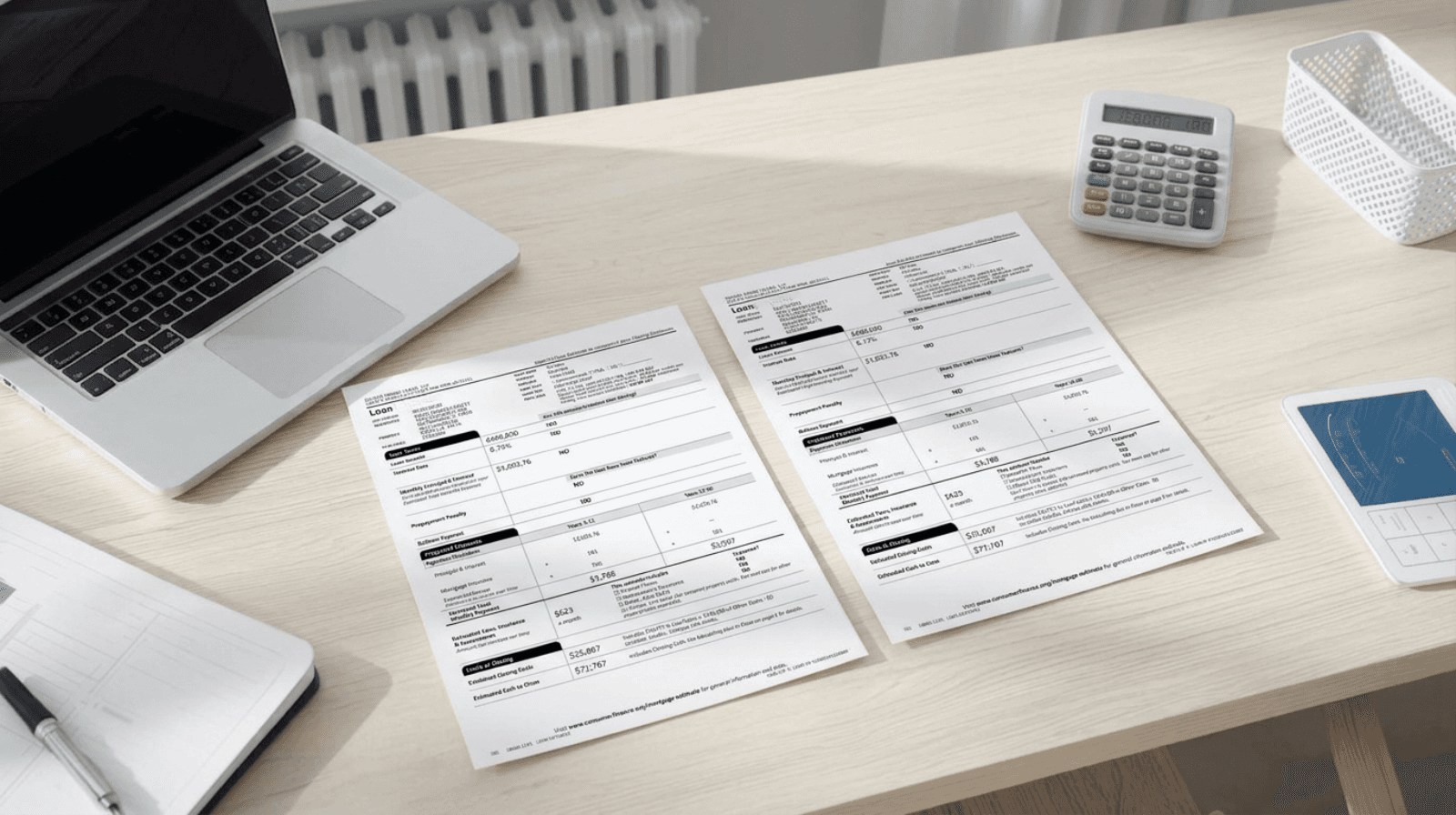

Most first-time buyers focus entirely on the purchase price and mortgage payment, completely ignoring the hidden costs that can increase their monthly expenses.
Here's the truth: property taxes, HOA fees, and zoning regulations can make or break your homeownership experience and impact your total cost of ownership. These "fine print" details aren't just boring paperwork — they're critical factors that affect your monthly budget, property rights, and long-term investment. This guide shows you what to look for so you don't get blindsided after closing.
Key Takeaways
Property Taxes Vary Wildly by Location:
Two identical homes 10 miles apart can have tax differences of $5,000 per year. Always research exact tax rates before making an offer.
HOA Fees Are a Permanent Monthly Cost:
You can refinance your mortgage, but you can't escape HOA dues. Factor them into your affordability calculations from day one.
Zoning Dictates What You Can Do:
Want to rent out your basement or run a home business? Zoning laws might say no, regardless of what you want.
Special Assessments Are Budget Killers:
HOAs can levy one-time fees of $5,000-$20,000 for major repairs. Check the reserve fund before buying.
Tax Assessments Can Spike After Purchase:
Many municipalities reassess homes after sale, increasing your tax bill as soon as year two.
💡 Pro Tip: Once you've calculated your true monthly costs, including taxes and HOA fees, make sure you're getting the best mortgage rate possible. Upload your Loan Estimate to Fincast and let vetted lenders compete to potentially beat your rate — no extra credit pulls, no spam, just better terms.
Property Taxes Explained 💰
Property taxes fund schools, police, fire departments, roads, and local services. They're calculated by multiplying your home's assessed value by the local tax rate (called the millage rate). But here's where it gets complicated: tax rates vary dramatically between cities, counties, and even neighborhoods within the same city. A $300,000 home might have $3,000 annual taxes in one town and $9,000 in the next town over. Never assume taxes will be similar across your search area.
How Tax Assessments Work
Counties assess your home's value periodically (annually or every few years). When you buy, many jurisdictions reassess based on your purchase price, which can significantly spike your taxes. The seller's tax bill reflects the old assessment -- yours might be significantly higher. Always ask your lender to calculate taxes based on your purchase price, not the seller's current bill. Some states cap annual tax increases (like California's Prop 13), while others allow unlimited increases.
Calculating Your Real Tax Burden
Find your target area's effective tax rate (total taxes divided by market value). Multiply your purchase price by this rate to estimate annual taxes. Divide by 12 for the monthly cost. Add this to your mortgage payment for true affordability. For example: $350,000 home × 2.5% effective rate = $8,750 annually or $729 monthly. That's a significant addition to your housing cost.
Understanding HOAs 🏘️
Homeowners Associations (HOAs) manage common areas and enforce community rules in condos, townhomes, and many single-family neighborhoods. Monthly fees range from $50 to $1,000+, depending on amenities. HOAs aren't inherently bad — they maintain property values and provide services — but you need to understand what you're signing up for.
What HOA Fees Cover
Typical expenses include landscaping, pool maintenance, common area repairs, trash collection, security, and insurance for shared structures. Higher fees don't always mean better management -- research what you're actually getting. Compare fees to amenities offered. A $400/month fee with a pool, gym, and extensive grounds maintenance might be reasonable. A $400/month fee for occasional landscaping is excessive.
The Reserve Fund Critical Check
The reserve fund covers major repairs (roof replacement, repaving, building exteriors). A healthy reserve fund usually has 70-100% of the required funds. Request the HOA's financial statements and review the reserve study. Underfunded reserves mean inevitable special assessments — one-time fees of $5,000-$20,000 or more. A weak reserve fund is a massive red flag that should make you reconsider the purchase.
Reading HOA Bylaws and CC&Rs
CC&Rs (Covenants, Conditions, and Restrictions) are the HOA's rules. Read them completely before buying. Common restrictions include paint colors, fence height, parking (no commercial vehicles or RVs), pet limits, rental restrictions, and landscaping requirements. Violating these rules can result in fines or legal action. If you can't live with the restrictions, don't buy in that community.
Zoning Laws Matter 📋
Zoning regulations dictate how you can use your property. They control everything from building additions to running businesses to renting rooms. Ignoring zoning laws can result in fines, forced removal of structures, or the inability to sell your home later.
Common Zoning Restrictions
Residential zoning typically prohibits commercial activities (some allow home offices, others don't). Restrictions often include accessory dwelling units (in-law suites or basement apartments), short-term rentals (Airbnb might be illegal in your zone), maximum occupancy limits, and setback requirements (how close you can build to property lines). Check zoning before buying if you have specific plans for the property.
How to Research Zoning
Visit your city or county planning department website and search the property address. Review the zoning designation and what's permitted. Call the planning office with specific questions about your intended use. Ask your real estate agent to confirm zoning allows your plans. Never assume anything is allowed without verification. Getting denied a permit after purchase is expensive and frustrating.
Variances and Exceptions
If zoning prohibits what you want to do, you can apply for a variance (exception to the rules). This requires a formal application, often a public hearing, and approval isn't guaranteed. The process takes months and costs money with no certainty of success. Don't buy property assuming you'll get a variance -- buy property that's already zoned for your intended use.
Red Flags to Watch For ⚠️
Rapidly increasing HOA fees: 10%+ annual increases may signal poor financial management
Under-funded reserves: Below 50% funded may mean special assessments are coming
Recent special assessments: Indicates deferred maintenance or financial problems
Pending litigation: HOA lawsuits can result in surprise fees
High delinquency rates: Many owners not paying dues signal trouble
Restrictive CC&Rs: Overly strict rules you can't live with
Tax appeals in progress: Current low taxes might not last
How Fincast Helps You Afford the True Cost 🚀
Once you've calculated your complete monthly payment, including property taxes and HOA fees, it's critical to get the best possible mortgage rate. Every 0.25% in rate savings may help offset these unavoidable costs.
Here's how Fincast works:
Complete an application with one lender and receive your Loan Estimate
Upload the Loan Estimate to Fincast -- secure, simple, no hassle
Vetted lenders compete -- they review your LE and offer better terms if they can beat it
Potentially save thousands -- even small rate improvements make a big difference over 30 years
No extra credit pulls. No spam calls. Just transparent competition that helps you afford your true monthly payment.
FAQs
1. Can I avoid HOA fees by not joining?
No. If the property is in an HOA, membership is mandatory. You can't opt out. HOA dues are a legal obligation that comes with the deed.
2. What happens if I can't pay a special assessment?
The HOA can place a lien on your property and eventually foreclose if you don't pay. Special assessments are legally binding. Most HOAs allow payment plans, but you can't simply refuse to pay.
3. Are property taxes tax-deductible?
They can be, up to $10,000 combined for state and local taxes (SALT cap) if you itemize deductions. This includes property taxes and state income taxes. Consult a tax professional for your specific situation.
4. Can I appeal my property tax assessment?
Yes. Most jurisdictions allow appeals if you believe your assessment is too high. Gather comparable sales data and file it during the appeal period. Success rates vary, but appeals can reduce your tax burden.
5. How do I find out about zoning restrictions?
Contact your city or county planning department. Most have online zoning maps and code databases. You can also call with specific questions about what's permitted on a particular property.
Bottom Line
Property taxes, HOA fees, and zoning restrictions aren't optional extras -- they're fundamental aspects of homeownership that impact your finances and lifestyle. Ignoring them leads to buyer's remorse and budget problems.
You're ready to make a smart purchase when:
You've researched exact property tax rates for your target properties
You've calculated total monthly costs including taxes and HOA fees
You've reviewed HOA financial statements and reserve fund status
You've read the complete CC&Rs and can live with all restrictions
You've verified zoning allows your intended use of the property
You've factored potential tax reassessment into your budget
Understanding these costs upfront prevents surprises and helps you budget accurately. Then upload your Loan Estimate to Fincast to ensure you're getting the best mortgage rate to offset these unavoidable expenses.
Pro Tips (Save These!)
Calculate taxes based on purchase price, not seller's current bill
Request three years of HOA financial statements before buying
Check reserve fund status -- under 70% funded is concerning
Read entire CC&Rs, not just the summary
Verify zoning allows rental income if that's part of your plan
Ask about recent or pending special assessments
Compare effective tax rates across cities, not just purchase prices
Upload your Loan Estimate to Fincast for better rates
Factor HOA fee increases into long-term budget planning
Action Checklist
Research property tax rates on the county assessor website
Calculate monthly taxes based on your purchase price
Request HOA financial statements for the past three years
Review the reserve study and funding percentage
Read complete CC&Rs and bylaws
Ask about special assessments in past five years
Verify zoning on the city planning department website
Confirm zoning allows your intended use (rentals, business, etc.)
Factor all costs into affordability calculation
Get pre-approved with accurate tax and HOA estimates
Upload your Loan Estimate to Fincast
Compare competing mortgage offers
Make an informed offer with complete cost understanding!
👉 Ready to buy with complete cost transparency? Calculate your true monthly payment, then upload your Loan Estimate to Fincast and let vetted lenders compete to give you the best possible rate.
Disclaimer: Nothing in this content should be considered financial advice. The examples and data shared are for general information only and may not reflect your personal situation. We do not guarantee the accuracy or completeness of the information provided. Always do your own research and speak with a qualified financial advisor before making any financial decisions.
Ready to Save On Your New Mortgage?