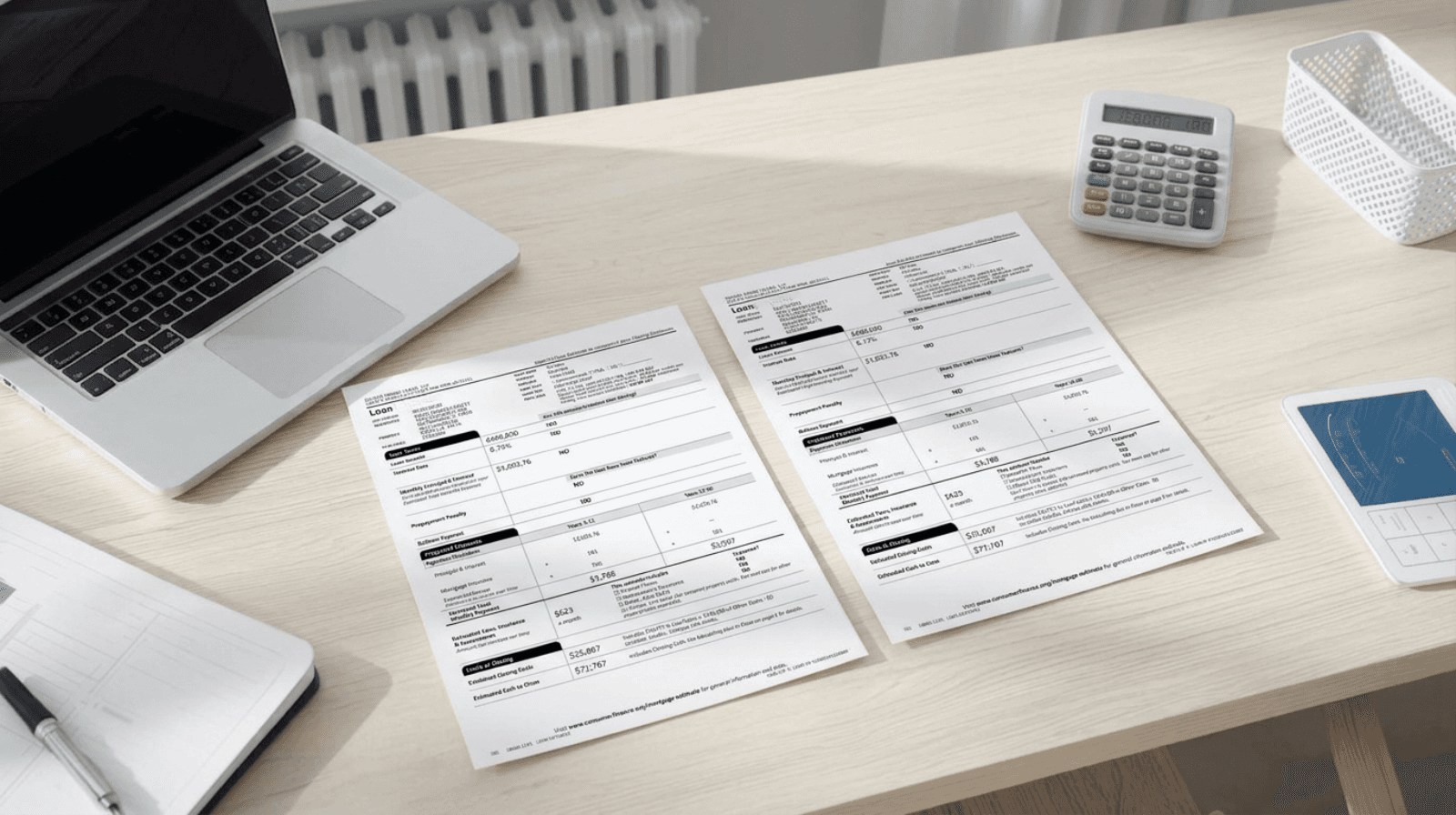

When comparing mortgage options, you’ll likely receive a few quick rate estimates over the phone — but later, your lender may offer you a Rate Lock Agreement.
At first glance, both relate to your interest rate. But they serve different purposes and occur at different stages of the loan process.
A phone quote is an early, verbal rate estimate based on unverified information. A Rate Lock Agreement is a written confirmation that secures your interest rate and loan terms for a specific period — protecting you from market fluctuations.
Understanding how they differ helps you shop confidently, time your lock strategically, and avoid costly surprises before closing.
Key Takeaways
Phone Quote:
A brief, verbal rate and payment estimate based on self-reported borrower info — helpful for early comparison, but not guaranteed.
Rate Lock Agreement:
A written, time-sensitive contract confirming your locked interest rate and key loan terms — typically issued after you’ve applied and selected a program.
Biggest Difference:
Phone Quote = estimate.
Rate Lock Agreement = guarantee.
💡 Pro Tip: Before locking your rate, upload your Loan Estimate to Fincast, where vetted lenders compete to offer better deals, with no extra credit pulls or spam. You’ll ensure you have the best deal for your situation and aren’t leaving money on the table.
What Is a Phone Quote?
A phone quote is an informal rate and payment estimate shared during an initial call with a lender or loan officer.
It’s designed to provide a rough estimate of what your mortgage could cost, based on broad assumptions such as credit score, income, and down payment amount.
Because lenders base it on unverified data, a phone quote is not binding and can change once the lender reviews your full application and credit report.
A typical phone quote includes:
Estimated interest rate and APR
Loan type and term
Approximate monthly payment
General assumptions (credit score, property type, down payment)
Rough estimate of closing costs
👉 Think of a phone quote as your verbal preview — useful for early comparisons, but not something you count on.
What Is a Rate Lock Agreement?
A Rate Lock Agreement is a written confirmation from your lender that secures your interest rate for a specific time period — usually 15, 30, 45, or 60 days.
Lenders issue it after you complete a full loan application, select a loan program, and provide key financial details.
The rate lock protects you from increasing rates while your loan is in process — but it may expire if you can get the loan closed before the lock period ends.
A Rate Lock Agreement usually includes:
Locked interest rate and APR
Loan program and term
Expiration date of the lock period
Any lock fees (if applicable)
Conditions that could void the lock (like loan changes or missed deadlines)
👉 Think of a Rate Lock Agreement as your rate insurance — it guarantees your quoted rate stays the same until closing (as long as you meet the conditions).
Phone Quote vs Rate Lock Agreement: Side-by-Side
Feature | Phone Quote | Rate Lock Agreement |
When You Get It | Early — during initial rate shopping | After the application and loan approval |
Purpose | Quick verbal estimate | Written guarantee of rate and terms |
Verification | Based on self-reported info | Based on verified borrower and property data |
Format | Verbal | Written, signed document |
Binding? | No | Yes — for a set lock period |
Best For | Early comparison | Securing your rate during processing |
How Should I Use Both When Buying a Home?
Each serves a clear purpose at a different stage of your mortgage journey.
Step 1: Start With Phone Quotes
Contact multiple lenders to obtain verbal rate estimates and identify the one that seems most competitive.
Step 2: Apply for Your Loan
After choosing a lender, submit your full application. This allows the lender to verify your information and confirm your eligibility.
Step 3: Review Your Loan Estimate
After completing a loan application and providing financial documentation, you’ll receive your Loan Estimate within three business days — a standardized summary of your rate and costs.
Step 4: Upload to Fincast
Upload your Loan Estimate to Fincast before locking in your rate. The platform benchmarks your deal across vetted lenders, showcasing more competitive rates or lower fees — all without impacting your credit.
Step 5: Lock Your Rate
When you’re comfortable with your lender and pricing, request a Rate Lock Agreement to secure your interest rate for a set period.
Why Both Matter
Your phone quote helps you begin comparing lenders.
Your Rate Lock Agreement ensures you don’t lose your deal.
Together, they take you from shopping to security — helping you capture a competitive rate with full confidence.
Shop Real Offers Effortlessly Using Fincast
Before locking in your rate, ensure it’s the best one available.
Upload your Loan Estimate to Fincast to see if better deals exist. You may find lenders that offer better rates or disclose hidden fees you didn’t even know existed on your original LE.
✅ No multiple applications
✅ No extra credit pulls
✅ No spam
You’ll see exactly how your deal stacks up — before you lock or close.
FAQs
1. Is a Rate Lock Agreement the same as a Loan Estimate?
No. A Loan Estimate outlines your loan’s costs; a Rate Lock Agreement secures your rate for a set period.
2. Can I rely on a phone quote?
Not fully — it’s based on assumptions and market conditions that can change quickly.
3. How long does a rate lock last?
Most last 30–60 days, but some lenders offer extended locks for a fee.
4. What happens if my lock expires?
If your loan doesn’t close on time, you may lose your locked rate or incur additional costs for an extension.
5. How does Fincast help?
Fincast benchmarks your Loan Estimate against vetted lenders — confirming you locked in a truly competitive deal.
Bottom Line
One helps you explore; the other protects your rate from changing.
With Fincast, you can ensure the rate you lock is the best one — before committing to your lender.
Pro Tips (Save These!)
✅ Don’t lock too early if you’re unsure about your lender.
✅ Ask about lock extensions and costs upfront.
✅ Always get your lock terms in writing.
✅ Compare your locked rate to your Loan Estimate for accuracy.
✅ Upload your Loan Estimate to Fincast before locking to confirm competitiveness.
Action Checklist
☑️ Gather phone quotes from multiple lenders
☑️ Apply with your top choice
☑️ Review your Loan Estimate
☑️ Lock your rate and get the agreement in writing
☑️ Upload your Loan Estimate to Fincast to confirm your deal
👉 Ready to lock your rate with confidence?
Upload your Loan Estimate to Fincast and ensure the rate you’re locking is truly your best one yet.
Disclaimer: Nothing in this content should be considered financial advice. The examples and data shared are for general information only and may not reflect your personal situation. We do not guarantee the accuracy or completeness of the information provided. Always do your own research and speak with a qualified financial advisor before making any financial decisions.
Ready to Save On Your New Mortgage?