
Most homebuyers fixate on the interest rate — but the amortization schedule quietly determines how expensive your mortgage really is. Two loans with the same rate can still cost different amounts once fees, term length, mortgage insurance, and loan structure are considered. Many borrowers unknowingly pay tens of thousands more in interest simply because they never review their amortization schedule.
If you don’t understand how amortization works, you’re likely underestimating what your loan truly costs. This simple tip can help many borrowers reduce interest costs, sometimes by tens of thousands over time.
Key Takeaways
The amortization schedule shows how fast you build equity
Total interest paid often matters more than the headline rate
Early payments are mostly interest, not principal
Small changes can have an outsized long-term impact
Understanding amortization helps you compare real value
What an Amortization Schedule Actually Shows
An amortization schedule is a breakdown of every mortgage payment over time. It shows exactly how much of each payment goes to interest and how much goes to principal.
Early in the loan:
Most of your payment goes to interest
Principal reduction is minimal
Equity grows slowly
Later in the loan:
Interest portion shrinks
Principal reduction accelerates
Equity grows faster
Why this matters:
Your payment stays the same, but where the money goes changes dramatically.
Takeaway: Payment size doesn’t equal progress.
💡 Pro Tip: The first few years of a mortgage are the most expensive in interest. Even a 0.25% rate difference can cost thousands of dollars over the life of the loan, depending on the loan size and term.
Why Total Interest Paid Is the Hidden Cost
Borrowers often compare loans based on the monthly payment alone. That’s a mistake.
Total interest paid depends on:
Loan term (15 vs 30 years, etc.)
Interest rate
How long you keep the loan
Whether you make extra payments
A slightly higher payment can result in much lower lifetime cost.
Example:
A loan with a modestly higher payment but faster principal reduction may save far more interest than a “cheaper-looking” option.
💡 Pro Tip: Ask lenders for amortization schedules through the year you expect to sell or refinance and compare the total interest paid during that period.
The Tip Most Borrowers Miss
Here’s a simple but powerful tip:
Always compare loans by total interest paid over your expected ownership period, not by the full loan term.
Why this works:
Most borrowers don’t keep mortgages for the full term
Refinancing or selling changes the math
Early amortization matters more than later years
Micro-scenario:
A borrower plans to stay in the home for seven years. Loan A looks cheaper over 30 years. Loan B costs less in interest over seven years — but only one shows that clearly.
💡 Pro Tip: Cheap monthly payments often mean expensive long-term outcomes. Using a tool like Fincast can help you understand the long-term costs. Research and industry reporting consistently show that borrowers struggle to accurately compare Loan Estimates because fee structures and amortization differences are difficult to evaluate side by side.
How Loan Structure Changes Amortization
Several loan features directly affect how interest accrues.
Key factors:
Loan term: Longer terms slow principal payoff
Rate type: Lower rates reduce interest drag
Points and credits: Affect cost but not amortization
Extra payments: Accelerate equity significantly
Even small extra payments early can:
Reduce total interest substantially
Shorten the loan life
Improve refinance or resale flexibility
Takeaway: For many borrowers, early extra payments can have a larger impact than later payments.
The exact results vary by borrower and loan situation. No two borrowers will have the same effects with the same amount of extra money paid per month.
Why This Matters for Refinancing and Selling
Amortization impacts your options later.
Slower equity growth can:
Limit refinance opportunities
Reduce cash-out flexibility
Increase risk if prices soften
Faster equity growth provides:
More options
Better leverage
Lower risk
Why this matters:
Your future choices depend on today’s amortization path. Knowing all of your options is essential to making confident choices.
Step-by-Step: How to Use Amortization to Compare Loans
Request the amortization schedule
Identify your realistic time horizon
Compare the total interest paid by that point
Test small extra payment scenarios
Choose based on flexibility and cost
Common Borrower Mistakes
Comparing loans only by rate
Ignoring total interest paid
Assuming they’ll keep the loan forever
Overvaluing low payments
Never reviewing amortization tables
💡Pro tip: Two lenders could analyze identical loan profiles and produce wildly different offers. This is exactly where Fincast can provide additional visibility into how your offer compares across lenders. Upload a single Loan Estimate and get competing offers to see where your offer stands.
How Fincast Helps You See the Real Cost
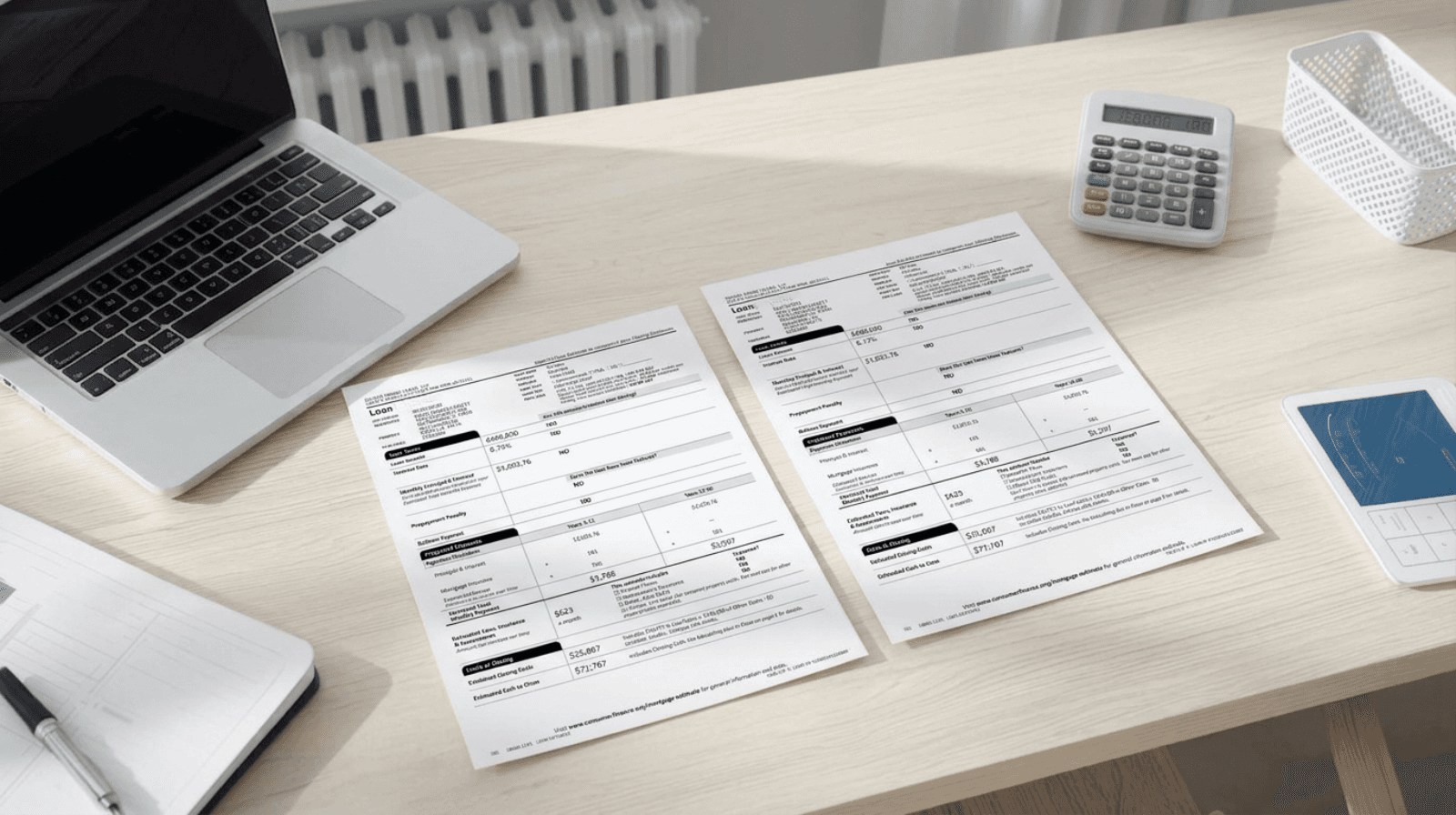
One of the most reliable ways to compare loans is by reviewing Loan Estimates side by side. When you apply for a loan, the lender must issue an LE within three business days. You can use the information on the LE to compare offers between lenders either manually or using Fincast. Here’s how it works:
Upload your Loan Estimate securely.
Fincast benchmarks your deal across vetted lenders.
You remain anonymous while lenders compete to beat your offer.
You choose the strongest offer — no spam, no extra credit pulls.
By lining up offers side by side, Fincast highlights the differences in amortization and total interest to help you make confident decisions.
Results vary by borrower profile, market conditions, and lender participation.
FAQs
What is an amortization schedule?
An amortization schedule shows how each mortgage payment is split between interest and principal over time.
Why is the total interest paid important?
Total interest paid reveals the true cost of a loan, often far exceeding the original loan amount.
Do extra payments really make a difference?
Yes. Making extra payments early in the loan term can significantly reduce total interest and shorten the loan term.
Should I compare loans by monthly payment or total cost?
Both matter, but total interest paid often tells the more important story.
How long do most borrowers keep a mortgage?
Many refinance or sell well before the full term, which makes early amortization especially important.
Can amortization affect refinancing later?
Yes. Faster principal reduction improves equity, which can expand future refinance options.
Bottom line: Your mortgage’s true cost isn’t hidden in the rate — it’s revealed in the amortization schedule. When you compare loans based on how interest accumulates over the time you’ll actually keep them, smarter decisions become obvious and expensive surprises disappear.
👉 See how your loan really compares. Upload your Loan Estimate to Fincast and watch vetted lenders compete to beat your offer, anonymously, with no extra credit pulls.
This article is for educational purposes only and does not constitute personalized financial advice. Mortgage requirements vary by lender and individual circumstances. Consult with a licensed mortgage professional for your specific situation.
Disclaimer: Nothing in this content should be considered financial advice. The examples and data shared are for general information only and may not reflect your personal situation. We do not guarantee the accuracy or completeness of the information provided. Always do your own research and speak with a qualified financial advisor before making any financial decisions.
Ready to Save On Your New Mortgage?