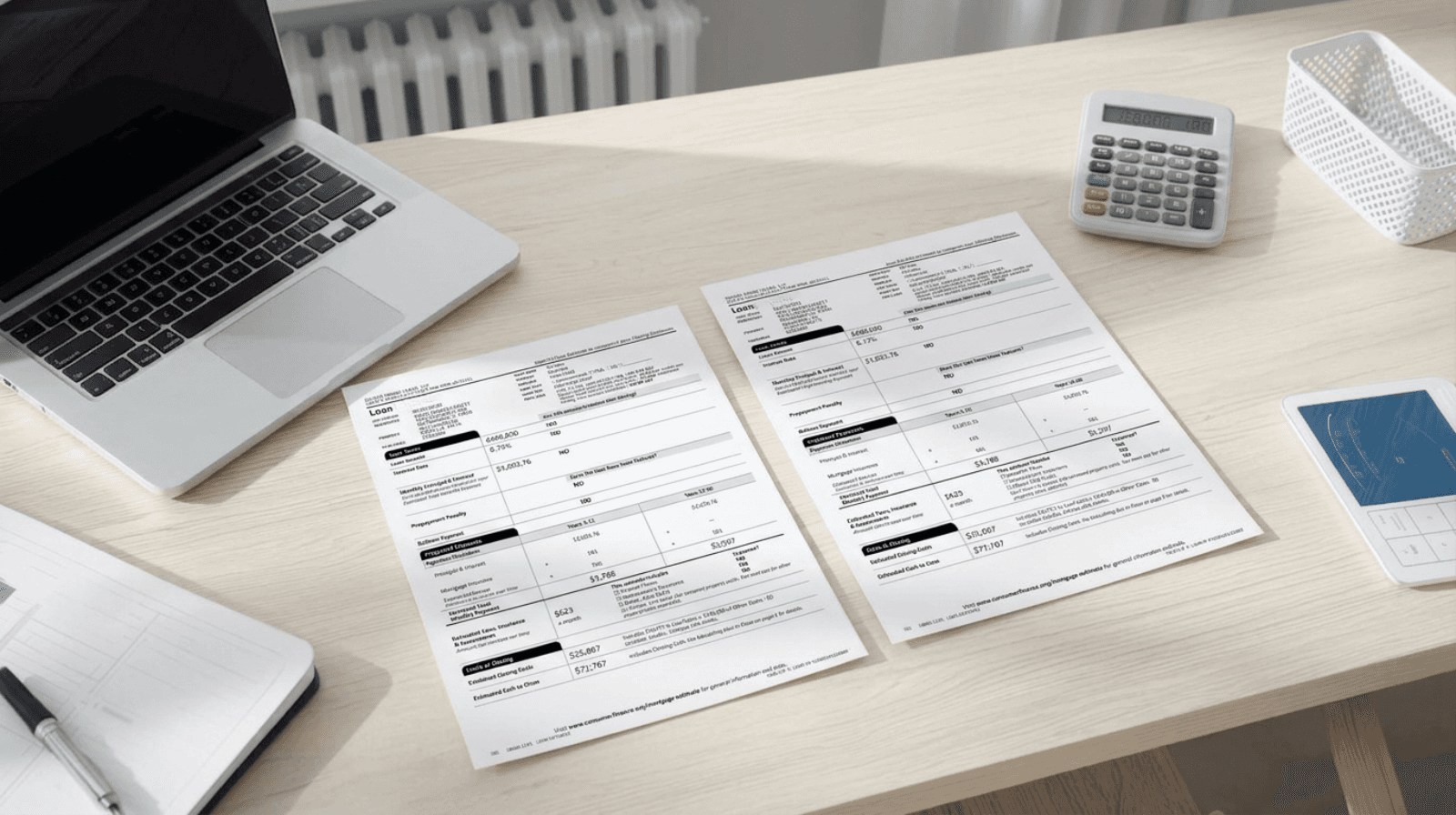
When you’re moving through the mortgage process, you might receive both a Loan Summary and a Rate Lock Agreement from your lender.
At first glance, both seem to confirm details about your loan, but they serve different purposes at different stages of your homebuying journey.
A Loan Summary provides a snapshot of your loan’s structure — your loan amount, term, and payment, often after pre-approval or providing supporting documentation. A Rate Lock Agreement is a formal confirmation of your interest rate and pricing for a set period.
Understanding how they differ helps you track your loan’s progress, verify your locked rate, and avoid surprises before closing.
Key Takeaways
Loan Summary:
A lender-generated overview of your loan’s potential terms, amount, and payment — a clear snapshot after consultation with a lender.
Rate Lock Agreement:
A binding confirmation that your interest rate is guaranteed for a specific timeframe — typically 30–60 days.
Biggest Difference:
Loan Summary = informational.
Rate Lock Agreement = contractual.
💡 Pro Tip: Before locking your interest rate, upload your Loan Estimate to Fincast. You receive the Loan Estimate after formally applying for the loan. Fincast shares your LE with vetted lenders who compete to beat your deal, with no extra credit pulls or spam.
What Is a Loan Summary?
A Loan Summary (also called a “Loan Overview” or “Loan Detail Sheet”) is a concise summary that outlines your loan’s potential key terms and structure.
It’s not a legal disclosure — but it’s an important checkpoint that reflects your loan data as you work with a lender, often before you formally apply for the loan.
A Loan Summary typically includes:
Loan amount, rate, and term
Loan type (Conventional, FHA, VA, etc.)
Estimated monthly payment (including taxes and insurance)
Borrower and property details
Loan status and conditions
Estimated closing date
👉 Think of a Loan Summary as your loan snapshot — it shows where your loan stands with a specific lender and what they may offer.
What Is a Rate Lock Agreement?
A Rate Lock Agreement (sometimes called a “Rate Lock Confirmation”) is a formal contract between you and your lender that secures your interest rate for a set number of days.
It protects you from market fluctuations while your loan is in process — meaning your rate won’t change before closing as long as your lock is active.
A Rate Lock Agreement typically includes:
Locked interest rate and loan program
Lock period (e.g., 30, 45, or 60 days)
Expiration date
Applicable points, credits, or fees
Terms for lock extensions or changes
👉 Think of a Rate Lock Agreement as your rate guarantee — it locks in your pricing and gives you peace of mind while you move toward closing.
Loan Summary vs Rate Lock Agreement: Side-by-Side
Feature | Loan Summary | Rate Lock Agreement |
When You Get It | Early in the process, often during pre-approval or after sharing documentation proving your income or assets, but before receiving your official Loan Estimate | After locking your rate |
Purpose | Summarize your potential loan’s structure and details | Guarantee your rate and pricing for a set period |
Verification | Based on the information you’ve shared, some of which may be verified | Based on the confirmed rate and program terms |
Format | Informational summary document | Formal, contractual agreement |
Regulation | Not federally required | Not federally required, but lenders must follow TRID rules when a rate lock results in a revised Loan Estimate |
Binding? | No | Yes — binding for the duration of the lock period |
Best For | Reviewing potential loan details | Securing your interest rate before closing |
How Should I Use Both When Buying a Home?
Each plays a critical role — one keeps you informed, the other keeps your rate protected.
Step 1: Review Your Loan Summary
After discussing options with a lender and potentially providing supporting documentation, review your Loan Summary to confirm your rate, payment, and term reflect what you expected.
Step 2: Apply for Your Loan
Once your offer on a home is accepted, submit your loan application. You’ll receive your Loan Estimate within three business days.
Step 3: Upload Your Loan Estimate to Fincast
The platform benchmarks your current deal against vetted lenders to ensure you have the most competitive deal.
Step 4: Lock Your Rate
When you’ve chosen the best deal for your situation, ask your lender to lock your rate. You’ll receive a Rate Lock Agreement confirming your rate and expiration date.
Step 5: Track Your Timeline
Keep an eye on your lock expiration date to avoid extension fees or last-minute rate changes.
Why Both Matter
Your Loan Summary provides a summary of your loan’s potential details.
Your Rate Lock Agreement ensures your chosen details — especially your rate — stay protected.
Together, they give you clarity and security from loan processing to closing.
Compare Real Offers Effortlessly Using Fincast
Before and possibly after locking your rate, verify your numbers.
Upload your Loan Estimate to Fincast — the platform benchmarks your deal against vetted lenders to show whether better pricing or lower fees are available.
✅ No multiple applications
✅ No extra credit pulls
✅ No spam
You’ll see exactly how your deal stacks up — before you close.
FAQs
1. Is a Loan Summary the same as a Rate Lock Agreement?
No. A Loan Summary is an informational document; a Rate Lock Agreement is a binding confirmation of your locked rate and pricing.
2. When should I lock my rate?
Typically, once your application is complete and you’re confident in your loan terms. Remember, rates can change daily.
3. Can I extend my rate lock?
Yes, most lenders allow extensions, though they may charge a small fee depending on market conditions.
4. Does locking my rate guarantee my loan approval?
Not necessarily — you still need to meet underwriting and property requirements.
5. How does Fincast help?
Fincast benchmarks your Loan Estimate against vetted lenders — confirming your deal is competitive and fair.
Bottom Line
Loan Summary = current snapshot.
Rate Lock Agreement = rate guarantee.
One shows where your loan stands; the other protects what you’ve locked in.
With Fincast, you can ensure your deal is the best available — before you close.
Pro Tips (Save These!)
✅ Review your Loan Summary and Rate Lock Agreement carefully.
✅ Upload your Loan Estimate to Fincast to confirm your deal’s competitiveness.
✅ Confirm your lock expiration date and any fees for extensions.
✅ Ask if your lender offers a float-down option if rates drop.
✅ Keep both documents for your records.
Action Checklist
☑️ Choose a lender and discuss your loan options, reviewing your Loan Summary after it’s issued
☑️ After officially applying for a loan, upload your Loan Estimate to Fincast for instant benchmarking
☑️ Lock your rate with your chosen lender and review your Rate Lock Agreement
☑️ Confirm your lock expiration date
☑️ Close confidently knowing your rate and deal are verified
👉 Ready to lock with confidence?
Upload your Loan Estimate to Fincast and confirm your loan pricing — and your deal — are truly your best yet.
Disclaimer: Nothing in this content should be considered financial advice. The examples and data shared are for general information only and may not reflect your personal situation. We do not guarantee the accuracy or completeness of the information provided. Always do your own research and speak with a qualified financial advisor before making any financial decisions.
Ready to Save On Your New Mortgage?