
At first glance, refinancing from 7% to 6.5% might feel underwhelming.
It’s only half a percent. Is that really worth the paperwork, closing costs, and resetting your mortgage clock?
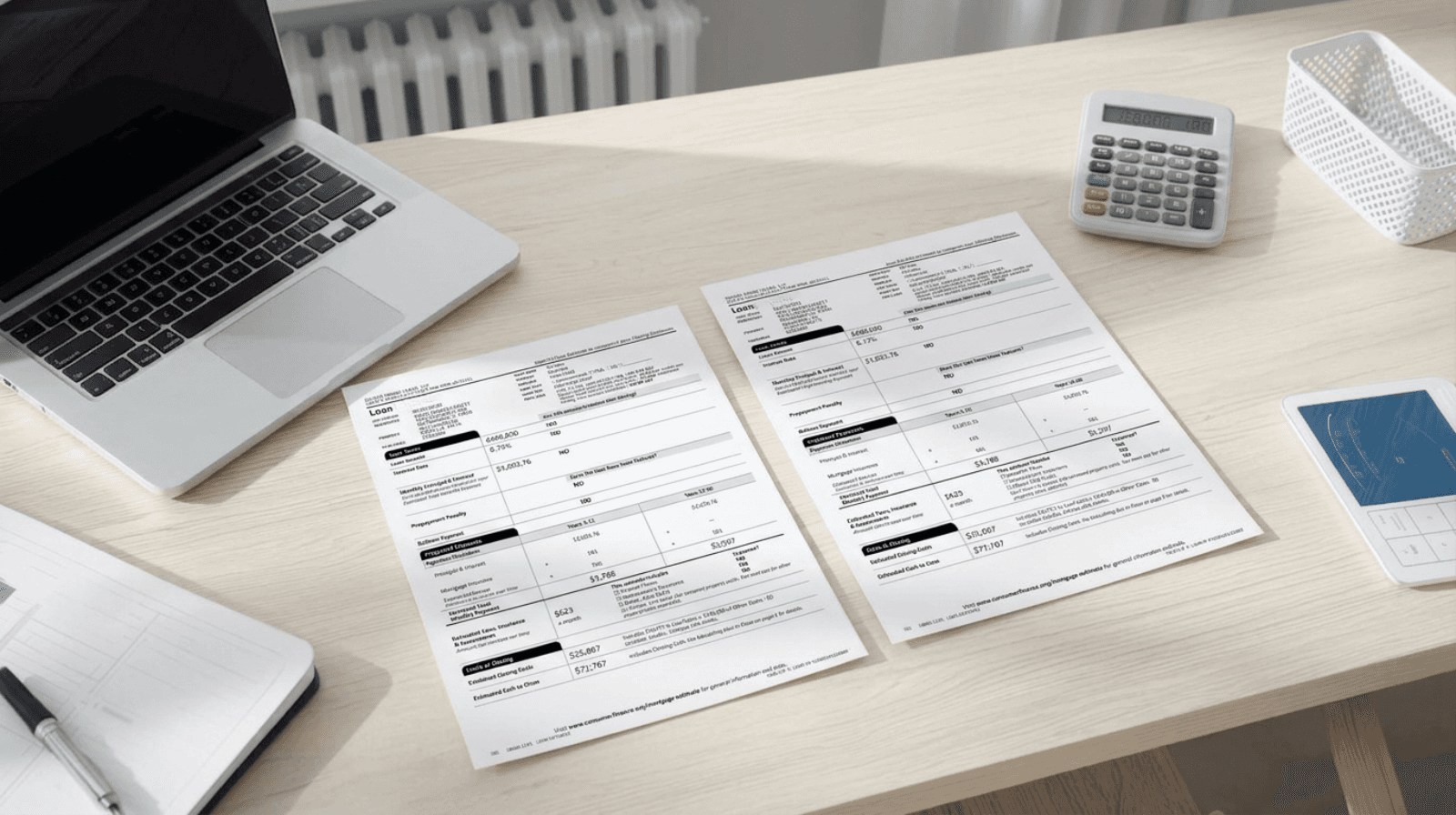
Short answer: sometimes yes — but it depends on your borrower profile, future plans, and whether you’ve found the best deal. Tools like Fincast can help you compare multiple offers from a single Loan Estimate to see if refinancing makes sense for you.
Whether this kind of refinance makes sense depends on:
Your loan balance
Your closing costs
How long you will stay in the home
Whether you’re changing your loan term or dropping mortgage insurance
Let’s walk through how to figure out if this move makes sense for you, including the factors to consider.
💡Pro tip: Refinancing doesn’t always make sense, especially when the drop is only from 7% to 6.5%. It’s important to look at the big picture and ensure you’ve secured the best deal for your financial profile and today’s market.
All figures used in this blog are for illustrative purposes only; your actual numbers will differ.
Why a 0.5% Drop Can Still Matter
While it seems so minimal, a half-point rate drop may:
Lower your monthly payment
Trim your total interest over time
Free up a bit of cash flow each month
But here’s the catch:
The smaller the rate drop, the longer it usually takes to make back your closing costs.
With a 7% → 6.5% refinance, you’re playing more of a long game. If you’re going to stay in the home for many years, it can still pay off. If you might sell or refinance again soon, it may not be worth it.
The key number to look at? Your break-even point.
The Core Math: Break-Even Point 101
The break-even point tells you how long it takes for your monthly savings to “pay back” the cost of refinancing.
Simple formula:
Break-even (months) = Refinance closing costs ÷ Monthly payment savings
If you stay in the home beyond that break-even point, your refinance starts saving you real money. Leave earlier, and you basically pay fees to borrow slightly cheaper money for too short a time.
💡Pro tip: Many homeowners take the first offer they’re given and assume it’s all they can get. This can leave money on the table and make the difference between refinancing being worthwhile and not. Fincast can help you find savings by securing offers from vetted lenders from a single Loan Estimate.
Breaking Down the Numbers: 7% vs 6.5% on a $400,000 Loan
It helps to look at real-world numbers to see how a small change in interest may help.
Please note, these figures are for illustrative purposes only. Your actual figures will differ.
Example:
Loan balance: $400,000
Current rate: 7%
New rate: 6.5%
Term: 30 years in both scenarios
Estimated closing costs: $6,000–$8,000
Monthly payment comparison (principal & interest only)
At 7% over 30 years: about $2,661/month
At 6.5% over 30 years: about $2,528/month
Monthly savings ≈ $133
Now let’s plug into the break-even formula.
If closing costs are $6,000
$6,000 ÷ $133 ≈ 45 months
That’s about 3.75 years
If closing costs are $8,000
$8,000 ÷ $133 ≈ 60 months
That’s about 5 years
What this means:
If you’ll stay in the home for 7–10 more years, this refi might make sense.
If you expect to move in 2–3 years, you’ll likely never hit break-even — the refinance probably isn’t worth it.
What You Need for a Real Savings Analysis
To decide if a 7% → 6.5% refinance is worthwhile, you’ll need the following information:
From your current loan:
Current loan balance
Interest rate (7%)
Remaining term (e.g., 27 years left on a 30-year)
Current monthly payment (principal + interest)
Whether you’re paying PMI/MIP (mortgage insurance)
For the new loan:
New interest rate (6.5%)
New term (30 years, or matching your remaining years)
Estimated closing costs (and whether you’ll pay them upfront or roll them into the loan)
Whether it’s rate-and-term only or a cash-out refi
With those inputs, a mortgage calculator can show you:
New monthly payment and monthly savings
Break-even point in months/years
Total interest over the life of each loan
New payoff date vs your current payoff date
The Big Gotcha: Resetting Your Mortgage Clock
With a small rate improvement from 7% to 6.5%, resetting the term makes a significant difference.
If you’ve already paid a few years on your current loan and you refinance into a brand-new 30-year, you’re:
Lowering your rate ✅
Adding years back to the loan ❌
That can increase total interest even if your monthly payment drops.
Example scenario
You’ve paid 3 years on your 30-year mortgage at 7%
You refinance into a new 30-year at 6.5%
You extend your payoff date by three years, which also increases the interest paid. It’s important to ensure the added interest doesn’t exceed the cost of your current loan.
Sometimes the math still favors refinancing; other times, restarting the clock eats up most of the benefit of that 0.5% drop.
💡Pro tip: A strong compromise is to refinance into a term that’s close to your remaining years (e.g., if you have 27 years left, refi into 25 or 27), keeping your payoff date on track while still capturing some savings.
When a 7% → 6.5% Refi May Be Worth It
A smaller rate drop may be worth it if:
Your loan balance is relatively high (e.g., $300k, $400k, $500k+), so even small rate changes move real money
You expect to stay in the home well beyond the break-even point
You’re still in the early or middle years of your current loan
The refinance lets you remove PMI/MIP or switch into a more favorable loan type
You’re disciplined about not endlessly extending your term just for a slightly lower payment
In those cases, even a half-percent reduction may add up to several thousand dollars in total interest savings over time.
When It May Not Be Worth Refinancing
A 7% to 6.5% refi may not be a great move if:
You’re likely to move, sell, or refinance again within a few years
Your closing costs are high, pushing break-even far into the future
You’re deep into your mortgage (e.g., 20+ years in), and resetting a 30-year clock wipes away most of the benefit
The new loan comes with features you’re not comfortable with (e.g., a new adjustable-rate period you might not ride out safely)
In those situations, you may be better off:
Keeping your current loan
Making extra principal payments if your budget allows
Waiting for a bigger rate drop or a change in your financial situation
How Fincast Helps
Knowing if refinancing makes sense mathematically is the first step because choosing the wrong offer can cost you money rather than save it.
Deciding to refinance from 7% to 6.5% requires careful evaluation of all aspects, especially the fees and terms. Knowing what is available to you based on your current financial profile is key, and accepting the first offer you receive may not yield the best terms in today’s market.
Without shopping around, you could leave money, aka savings, on the table.
Everyone is welcome to shop around manually, but it takes time and effort. Fincast takes the load off your back, and all you need is a single Loan Estimate from any lender to upload to Fincast. With the information in your LE, you’ll secure offers from other vetted lenders to compete with your original offer.
You can compare the offers from each lender side by side to determine which makes the most sense and help you calculate your break-even point.
The best part is Fincast shares your Loan Estimate anonymously and without a hard credit check. You don’t have to worry about lowering your credit score or dealing with spam phone calls or emails because you shopped around for better terms.
Quick Self-Check: Should You Refinance from 7% to 6.5%?
There isn’t a one-size-fits-all answer to whether you should refinance from 7% to 6.5%. The key is evaluating these factors:
Loan size: Is your remaining balance large enough that a 0.5% drop would generate meaningful savings?
Timeline: Am I likely to remain in this home until the break-even period?
Costs: What are my estimated closing costs, and how long would it take for monthly savings to cover them?
Term: Will I restart a 30-year clock, or can I choose a term close to my remaining years?
Extras: Will I drop PMI/MIP or move to a more stable loan type (e.g., from an ARM to a fixed-rate)?
Refinancing may make sense if:
Your break-even point is well before when you plan to move.
You save a meaningful amount in total interest.
The new payment and term fit your real life.
If not, it’s completely fine to say “no thanks,” keep your current mortgage, and revisit later if rates move more.
Bottom Line
Refinancing from 7% to 6.5% is not an automatic “yes” or “no.” It’s a small rate change that can still lead to real savings — but only if:
Your balance is high enough
Your closing costs aren’t high
You’ll stay put long enough to break even
You aren’t undoing the benefit by massively resetting your term
A real savings analysis takes the guesswork out of it and gives you a clear answer based on your numbers.
👉Before you decide to refinance from 7% to 6.5%, upload one Loan Estimate to Fincast to see what the market actually looks like and what you might (or might not) save.
Disclaimer: Nothing in this content should be considered financial advice. The examples and data shared are for general information only and may not reflect your personal situation. We do not guarantee the accuracy or completeness of the information provided. Always do your own research and speak with a qualified financial advisor before making any financial decisions.
Ready to Save On Your New Mortgage?