
Managing your financial health and securing the best mortgage deal requires different tools and strategies. While both involve navigating the lending landscape, they serve distinct purposes at different stages of your financial journey.
This guide compares Fincast vs. Credit Karma - two platforms that both connect you with financial products, but in fundamentally different ways. One helps you monitor your credit and discover useful financial products, while the other helps you shop your existing mortgage offer for better terms.
Think of It Like This...
Imagine you're shopping for a new phone plan.
Using Credit Karma is like browsing a comparison site that shows you various plans you might qualify for based on your credit, giving you options from different carriers.
Fincast, on the other hand, is like taking the specific quote you already received from one carrier and letting other carriers compete to beat it, resulting in real, personalized offers that compete with what you already have.
💡 Pro Tip: Use Credit Karma to gather initial quotes, then upload your Loan Estimate to Fincast to see if vetted lenders can beat it through direct competition—without more phone calls or applications.
How Each Platform Works
Credit Karma --- The Credit Monitoring & Product Marketplace
Credit Karma is a free credit monitoring platform that helps you track and manage your credit health.
Think of it as your financial dashboard — it shows you your VantageScore 3.0 credit scores from TransUnion and Equifax, monitors your credit reports for changes, and alerts you about potential identity theft.
Beyond monitoring, Credit Karma acts as a financial product marketplace. Based on your credit profile, it recommends credit cards, personal loans, auto loans, and mortgage offers you might qualify for. When you apply through Credit Karma, they earn referral fees from lenders — that's how they keep the service free.
For mortgages, Credit Karma shows you personalized offers from various lenders and provides educational resources on home buying. However, it cannot guarantee you'll be approved for any offers you see, and the recommendations are based on estimates rather than confirmed offers.
Fincast --- The Reverse-Auction Platform
Fincast isn't a credit monitoring tool; it's your reverse-auction mortgage platform.
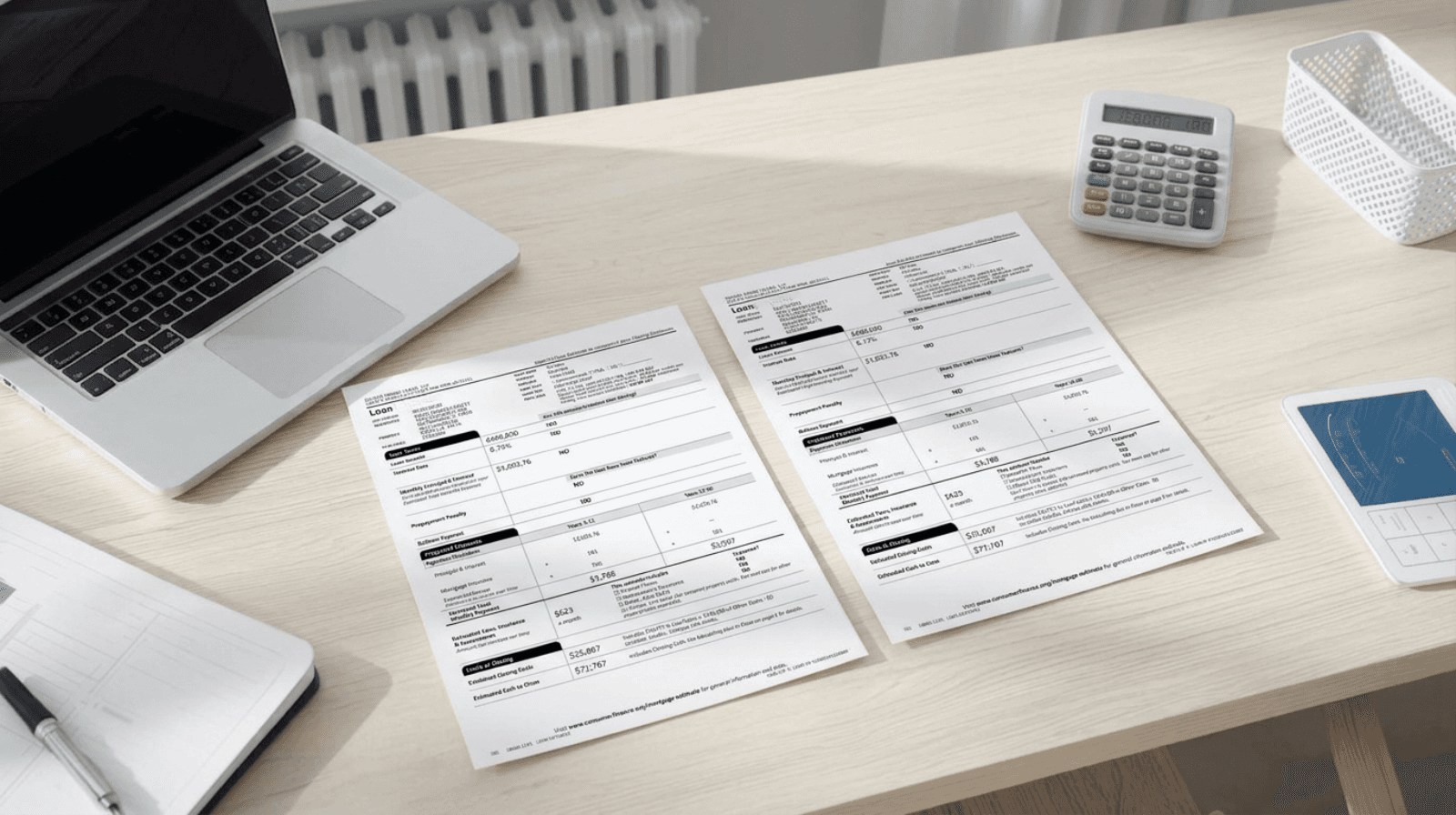
All you need is a Loan Estimate from any lender. Fincast uses technology to facilitate lender competition based on your uploaded Loan Estimate.
You receive personalized and real offers all in one place — not estimates of what you might qualify for, but actual competing offers based on your specific loan scenario.
The goal is to help you find competitive mortgage rates and costs through lender competition.
The Big Differences
Category | Credit Karma | Fincast |
|---|---|---|
Primary Purpose | Monitor credit health and discover financial products | Shop existing mortgage offers to compare terms |
Business Model | Referral marketplace — earns fees when you apply for products | Competitive bidding marketplace — lenders compete to win your business |
Type of Offers | Approval likelihood estimates ("good odds," "pre-approved") | Competing offers from participating, vetted lenders |
What You Need to Start | Basic personal information to create an account | An existing Loan Estimate from any lender |
Products Covered | Credit cards, personal loans, auto loans, mortgages, banking | Mortgages only (purchase and refinance) |
💡 Pro Tip: Already have a Loan Estimate? That’s where Fincast is designed to help. Upload it to explore competing offers from vetted lenders.
Credit Karma Advantages
Credit Karma offers several advantages for general financial management:
Comprehensive Credit Monitoring: Free access to your credit scores from TransUnion and Equifax, with weekly updates and credit report monitoring.
Identity Theft Protection: Alerts for suspicious activity and changes to your credit reports that could indicate fraud.
New Product Introductions: Recommendations for credit cards, personal loans, auto loans, mortgages, and banking products across multiple categories.
Credit Building Tools: Insights and recommendations on how to improve your credit score over time.
No Prerequisites: Start using it immediately — no existing loan or offer required.
Financial Education: Extensive resources about credit, loans, mortgages, and personal finance.
Banking Services: Optional checking and savings accounts through Credit Karma Money with competitive rates.
Free to Use: No cost for credit monitoring, scores, or recommendations.
Fincast Advantages
Fincast's approach has different advantages for mortgage shopping:
Real Competing Offers: Get actual loan offers from multiple lenders, not just likelihood estimates or "good odds" of approval.
Rate Competition: Multiple lenders compete for your business, helping you make confident decisions.
Leveraging Existing Estimates: Use an existing Loan Estimate to seek better terms without unnecessary credit pulls.
Verified Offers: All offers are real and personalized to your specific loan scenario, not general recommendations.
Potential Savings: Competitive bidding may save you thousands over the life of your mortgage through lower rates and reduced fees. (Actual savings vary by lender and borrower profile.)
Mortgage-Focused: Built specifically for mortgage offer shopping, not general credit monitoring or multiple product categories.
Transparency: Clear comparison of rates, fees, and terms across all competing offers.
Fincast is best suited for borrowers who already have a Loan Estimate and want to see how lender competition could affect their terms.
Potential Drawbacks to Consider
Credit Karma Limitations:
VantageScore vs. FICO: Credit Karma shows VantageScore 3.0, but most mortgage lenders use FICO scores, which may differ.
Approval Estimates, Not Guarantees: "Good odds" and "pre-approved" claims don't guarantee approval—applications can still be denied.
Hard Inquiries on Denials: If you apply for products through Credit Karma and get denied, hard inquiries can lower your credit score.
Marketing Focus: Heavy promotion of financial products — the platform earns money when you apply, which may influence recommendations.
FTC Settlement: Credit Karma paid $3 million in 2022 to settle FTC claims about deceptive "pre-approved" offers.
Fincast Limitations:
Requires Existing Estimate: You must have an existing Loan Estimate before using the platform.
Mortgages Only: Doesn't help with credit monitoring, credit cards, personal loans, or other financial products.
More Options Require Analysis: Multiple offers require time evaluating terms, rates, and lender reputations (although Fincast reviews participating lenders).
Understanding the Relationship Between These Platforms
Here's the key insight: Credit Karma and Fincast aren't direct competitors — they serve different purposes at different stages of your financial journey.
Credit Karma is best for: Ongoing credit monitoring, identifying which financial products you might qualify for, and general financial health management.
Fincast is best for: Shopping a specific mortgage offer you already have to get real competing offers with potentially better terms.
You could use both in your home-buying journey:
Step 1: Use Credit Karma to monitor your credit score and understand your financial health before applying for a mortgage
Step 2: Explore mortgage options through Credit Karma or directly with lenders
Step 3: Get a Loan Estimate from a lender
Step 4: Use Fincast to shop that Loan Estimate and get competing offers
Step 5: Continue using Credit Karma to monitor your credit health after closing
Choosing the Right Platform
Consider these questions:
Do I need to monitor my credit health and discover what financial products I might qualify for?
Do I already have a mortgage Loan Estimate that I want to shop for better terms?
Am I looking for credit cards, personal loans, or other financial products beyond mortgages?
How important is getting real competing offers versus approval likelihood estimates?
Do I understand the difference between VantageScore and FICO scores?
Am I comfortable with the trade-offs of each platform?
The Bottom Line
Credit Karma helps you monitor your credit health and discover financial products you may qualify for, with recommendations and approval likelihood estimates.
Fincast uses competition — helping you shop an existing mortgage offer by letting multiple lenders compete for your business.
These platforms serve fundamentally different purposes. If you're monitoring your credit or exploring what products you might qualify for, Credit Karma is useful. If you need to shop a specific mortgage offer for better terms, Fincast can help you learn your options.
The smart strategy? Use Credit Karma to maintain good credit health, get a Loan Estimate from any lender, and then use Fincast to secure leverage lender competition.
Disclosure: This article mentions Fincast as one option for mortgage comparison shopping. This content is intended for educational purposes only and should not be considered financial advice. Always compare multiple lenders and platforms to determine which platform best fits your specific needs.
FAQs
What is the main difference between Fincast and Credit Karma?
Credit Karma is a credit monitoring platform that shows you what financial products you might qualify for. Fincast is a mortgage marketplace that generates competitive offers from lenders based on your existing Loan Estimate.
Can I use both Credit Karma and Fincast?
Absolutely! They serve complementary purposes. Use Credit Karma to monitor your credit health, then use Fincast to shop for your mortgage offer once you have a Loan Estimate.
Do I need a Loan Estimate to use Fincast?
Yes. Fincast requires an existing Loan Estimate from any lender to start its reverse auction process.
Does Credit Karma guarantee mortgage approval?
No. Credit Karma provides approval likelihood estimates ("good odds," "pre-approved") but cannot guarantee approval. Many users are denied after applying through Credit Karma.
Which platform offers better mortgage rates?
Credit Karma shows you what rates you might qualify for. Fincast creates competition among lenders to deliver actual competing offers. Neither platform can guarantee lower rates or fees.
Who should use Credit Karma?
Anyone who wants to monitor their credit health, understand their financial standing, and discover financial products they might qualify for across multiple categories.
Who should use Fincast?
Borrowers with a Loan Estimate who want to shop for their mortgage offer and leverage lender competition to get better terms.
Is it safe to use Credit Karma and Fincast?
Both are legitimate platforms. Credit Karma is owned by Intuit (maker of TurboTax) and has over 100 million members. Fincast uses AI-driven competition and thoroughly vets all lenders. However, be aware of Credit Karma's limitations around approval estimates.
👉 Ready to compare smarter? If you’re still preparing, Credit Karma can help you monitor your credit. If you already have a Loan Estimate, Fincast can help you explore competitive alternatives based on your specific loan terms.
Disclaimer: Nothing in this content should be considered financial advice. The examples and data shared are for general information only and may not reflect your personal situation. We do not guarantee the accuracy or completeness of the information provided. Always do your own research and speak with a qualified financial advisor before making any financial decisions.
Ready to Save On Your New Mortgage?