Sharing your bedroom with pets is comforting — but without smart design, it can quietly cost you money, sleep, and sanity. Scratched floors, stained fabrics, fur everywhere, and constant replacements add up faster than most homeowners expect.
The good news is that a pet-friendly master bedroom doesn’t mean sacrificing style or blowing your budget. With the right choices, you can create a space that works for both you and your pets — and avoid repeat spending down the road.
Key Takeaways
Pet-friendly bedroom upgrades reduce long-term repair and replacement costs
Durable materials usually save money over time
Small layout changes can improve sleep and cleanliness
Smart upgrades balance comfort, durability, and resale appeal
Many homeowners fund bedroom upgrades through phased improvements or refinancing
1. Choose Durable, Scratch-Resistant Flooring
Flooring takes the most abuse from pets, especially in bedrooms where they sleep, play, and jump on beds.
Pet-friendly flooring options often include:
Luxury vinyl plank (scratch- and water-resistant)
Engineered hardwood with durable finishes
Low-pile, stain-resistant carpet tiles
While higher-quality flooring costs more upfront, it typically lasts far longer and avoids costly replacements.
💡 Pro Tip: Replacing bedroom flooring during a larger home project often lowers labor costs per room.
2. Invest in Washable, Pet-Resistant Bedding
Bedding quietly absorbs fur, odors, and wear — especially when pets share the bed.
Smarter bedding upgrades include:
Machine-washable duvet covers
Tightly woven, fur-resistant fabrics
Neutral colors that hide pet hair
These options reduce dry-cleaning, extend bedding life, and make maintenance easier.
Clear takeaway: Easy-to-clean materials save money by reducing replacements and upkeep.
3. Create a Dedicated Pet Sleep Zone
When pets don’t have their own space, they often take over yours.
Simple pet-zone ideas:
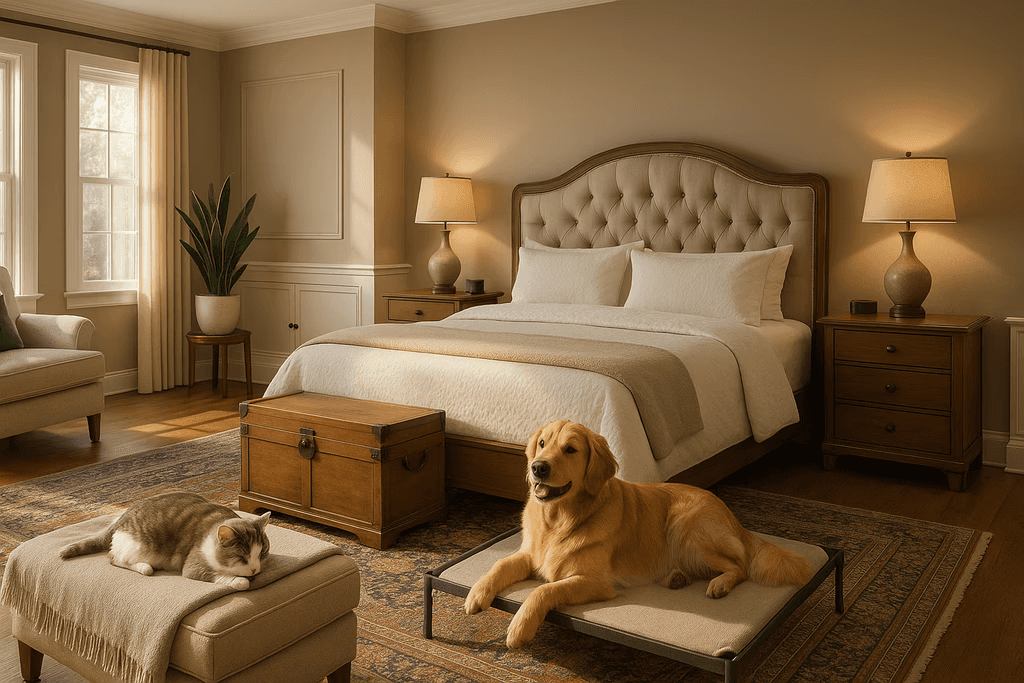
A low-profile pet bed beside the bed
Built-in bench seating with washable cushions
Under-bed pet nooks for smaller animals
When pets settle in predictable areas, it reduces the wear on mattresses and furniture.
💡 Pro Tip: Pets with defined sleep zones are often less disruptive overnight.
4. Use Pet-Friendly Furniture Fabrics
Furniture fabrics matter more than style trends when pets are involved.
Materials that perform best:
Performance fabrics labeled stain-resistant
Leather or faux leather (easy to wipe clean)
Tightly woven textiles that resist claw pulls
Avoid loose weaves and delicate fabrics that show damage quickly.
Clear takeaway: Choosing the right fabric once is cheaper than repeatedly replacing furniture.
5. Add Hidden Storage for Pet Supplies
Visible pet clutter makes bedrooms feel chaotic and unfinished.
Smart storage solutions include:
Bed frames with drawers
Nightstands with concealed compartments
Storage ottomans for toys and grooming tools
Keeping supplies tucked away protects aesthetics and reduces accidental damage.
6. Improve Air Quality and Odor Control
Pet hair and dander affect sleep quality and cleanliness.
Helpful upgrades:
HEPA air purifiers
Washable area rugs
Easily removable window treatments
Better air quality improves comfort and reduces the need for frequent deep cleaning.
💡 Pro Tip: Improved air filtration often benefits people and pets with allergies.
7. Choose Finishes That Hide Wear
Pet wear is inevitable — visibility is optional.
Smart finish choices:
Matte wall paint instead of high-gloss
Mid-tone colors that hide scuffs
Durable trim materials over soft woods
These reduce touch-ups and keep bedrooms looking newer longer.
Step-by-Step Framework: Designing a Pet-Friendly Master Bedroom
Identify where pets cause the most wear
Prioritize durable flooring and fabrics
Define a pet sleep zone
Add hidden storage for supplies
Improve air quality
Phase upgrades based on budget
Always consider safety, comfort, and realistic timelines.
Common Mistakes That Cost Pet Owners Money
Choosing trendy but fragile materials
Ignoring pet sleeping habits
Overlooking washable fabrics
Replacing cheap items repeatedly
Designing only for humans
FAQs
What is the best flooring for a pet-friendly master bedroom?
Luxury vinyl plank and engineered hardwood are popular pet-friendly flooring options for bedrooms due to their durability and easy cleaning.
Can a pet-friendly design still look stylish?
Yes. Pet-friendly bedroom design focuses on materials and layout, not sacrificing aesthetics.
Do pet-friendly upgrades cost more?
They may cost more upfront, but pet-friendly upgrades usually save money in the long term by reducing replacement costs.
How do I reduce pet hair in my bedroom?
Air purifiers, washable fabrics, and designated pet zones help manage pet hair effectively.
Are pet-friendly upgrades good for resale?
Durable, neutral finishes often appeal to future buyers and protect resale value.
Bottom Line
A pet-friendly master bedroom isn’t about luxury — it’s about smarter choices that prevent repeat spending. Durable materials, thoughtful layouts, and easy-to-clean finishes protect both your home and your budget while keeping tails wagging. 🐾
Disclaimer: Nothing in this content should be considered financial advice. The examples and data shared are for general information only and may not reflect your personal situation. We do not guarantee the accuracy or completeness of the information provided. Always do your own research and speak with a qualified financial advisor before making any financial decisions.
Ready to Save On Your New Mortgage?