As housing affordability strains budgets, bold ideas tend to resurface, and the 50-year mortgage is among the most discussed. On the surface, it promises lower monthly payments and broader access to homeownership. But longer loans don’t automatically mean better outcomes. While it is not a permanent solution yet, buyers need to understand what it actually changes—and what it doesn’t- if 50-year terms become readily available.
Key Takeaways
A 50-year mortgage lowers payments but increases total cost
Longer terms shift affordability today, not price risk tomorrow
Equity builds much more slowly
Refinancing and selling timelines matter more than ever
The “right” value depends on cash flow, not headlines
What a 50-Year Mortgage Actually Is
A 50-year mortgage extends the repayment term far beyond the traditional 30-year loan. Instead of spreading payments over three decades, the balance is amortized over five.
What this changes:
Monthly payment drops
Interest is paid for much longer
Equity accumulation slows dramatically
What it does not change:
Home price
Interest rate risk
Lending standards
Borrower responsibility
Why this matters:
Lower payments improve monthly affordability, but they don’t make homes cheaper.
Takeaway: Term length changes timing — not economics.
Why the 50-Year Mortgage Is Being Discussed
The proposal usually appears when affordability gaps widen.
Common motivations include:
Rising home prices
Stretched household budgets
Pressure to expand homeownership access
Desire to lower required monthly payments
Extending loan terms is one of the fastest ways to reduce payments without lowering prices — which is why it keeps coming up.
How Monthly Payments Compare
Longer terms reduce required payments — but by less than many expect.
Typical effects:
Noticeable but modest payment reduction
Much higher total interest paid
Smaller early principal reduction
Micro-scenario:
If you borrow $100,000 at 6% for 30 years, your monthly principal and interest would be $599.55, and total interest paid would be $115,838. If you extend the term to 50 years using the same loan amount and interest rate, your monthly payment would be $526.40, and total interest paid would be $215,843.
So you’d save $73.15 a month, but pay $100,005 more in interest.
These numbers are for illustrative purposes only and do not make up a real mortgage. Consult with your mortgage advisor to see what you qualify for.
Takeaway: The trade-off is immediate relief for long-term cost.
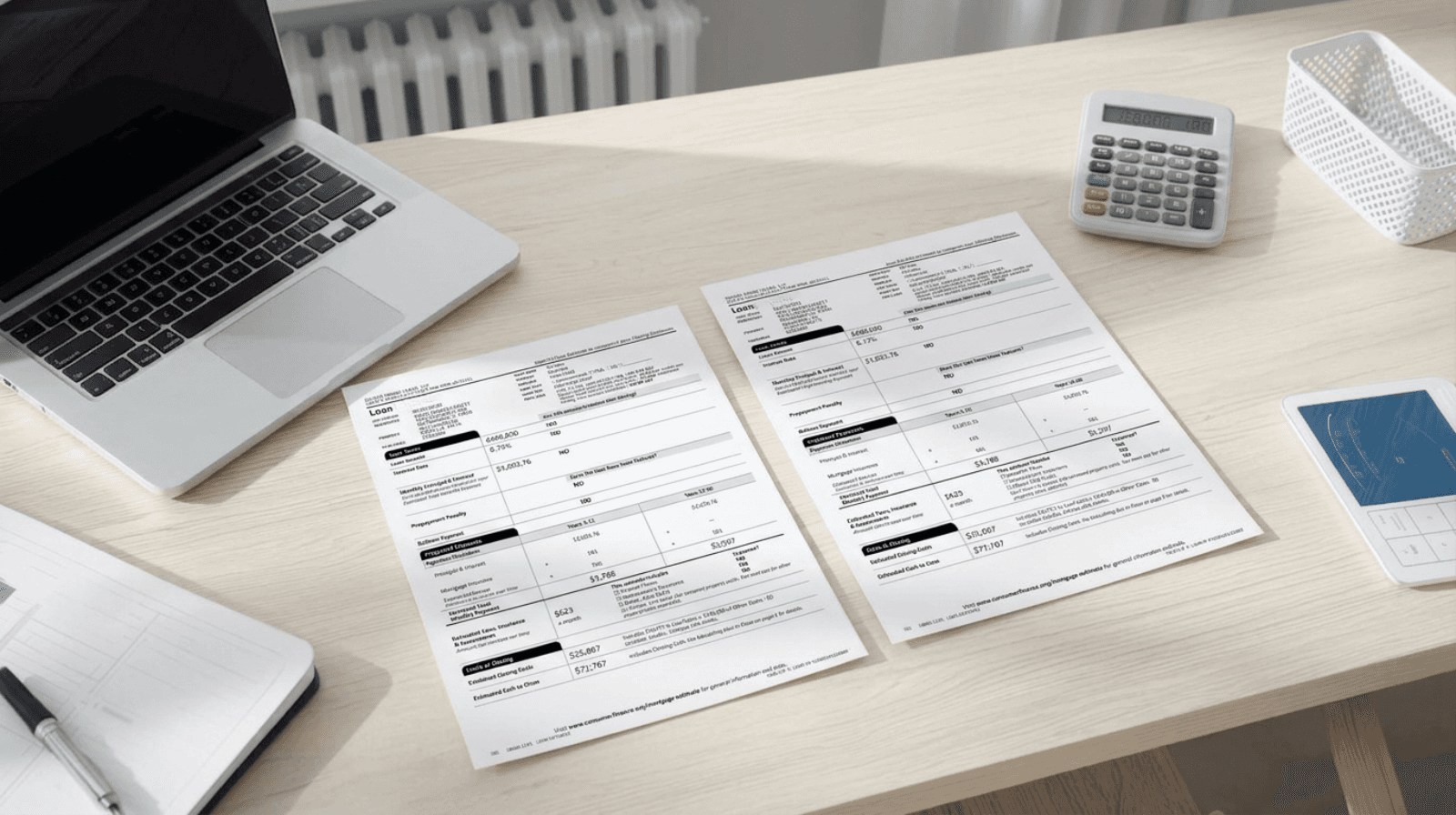
💡 Pro Tip: Comparing loan terms yourself? Most buyers don't realize they can benchmark any Loan Estimate against competing offers—without extra credit pulls or sharing contact info with multiple lenders. Tools like Fincast let you upload a single estimate and see whether better pricing is available across pre-screened lenders.
The Equity Trade-Off Most Buyers Miss
Equity builds slowly in any mortgage — but especially in very long terms.
With a 50-year loan:
Early payments are mostly interest-saving
Equity growth has been minimal for many years
Market downturns carry a higher risk
Selling early may yield little payoff
Why this matters:
Equity is your safety buffer. Slower growth means less margin if plans change.
Who a 50-Year Mortgage Might Help
In limited scenarios, longer terms could be a temporary tool.
Potential use cases:
Borrowers prioritizing near-term cash flow
Buyers expecting rising income over time
Those planning to refinance later
Situations where flexibility outweighs payoff speed
Important caveat:
These scenarios assume discipline and future action — not passive repayment.
Takeaway: Long-term requirements require an active strategy.
Who Should Be Careful
For many buyers, the risks outweigh the benefits.
Red flags include:
Stretching to afford the purchase price
No plan to refinance or accelerate payments
Limited emergency savings
Relying on appreciation to bail out the math
Takeaway: Longer loans magnify mistakes more than discipline.
The Behavioral Risk Factor
One of the biggest issues with ultra-long mortgages is behavior.
What often happens:
Buyers stick with minimum payments
Extra cash doesn’t get invested or saved
Refinancing plans get delayed
Total cost balloons quietly
Why this matters:
Math assumes perfect behavior. Real life rarely delivers it.
Step-by-Step: How to Evaluate a 50-Year Mortgage
Compare monthly payment differences honestly
Calculate total interest paid
Estimate how long you’ll keep the loan
Stress-test your cash flow
Get a second opinion on your offer
Don't assume your first Loan Estimate is competitive. Fincast benchmarks your terms across multiple lenders in minutes—without re-applying or talking to loan officers. [Upload your Loan Estimate - Free, no credit pull required →]
Common Mistakes Buyers Make With Long-Term Loans
Focusing only on payment size
Ignoring equity implications
Assuming future refinancing is guaranteed
Underestimating total interest
Treating the loan as “set it and forget it”
FAQs
What is a 50-year mortgage?
A 50-year mortgage spreads repayment over a longer period, lowering monthly payments but increasing total interest paid.
Do 50-year mortgages make homes more affordable?
They can reduce monthly payments, but they don’t reduce home prices or total borrowing cost.
Is a 50-year mortgage better than a 30-year mortgage?
Not necessarily. It depends on cash flow needs, future plans, and discipline with payments.
Can you refinance out of a 50-year mortgage?
Possibly, but refinancing depends on market conditions, credit, and equity at the time.
Does equity build more slowly with a 50-year mortgage?
Yes. Principal reduction is much slower compared to shorter loan terms.
Are 50-year mortgages risky?
They can be if used to stretch affordability without a clear long-term plan.
Bottom Line
A 50-year mortgage may sound like a breakthrough, but it’s a trade-off — not a shortcut. For buyers who understand the risks and plan proactively, it can be a temporary tool. For everyone else, it’s a reminder that lower payments today often mean higher costs tomorrow.
👉 See if you're overpaying. If you've received a Loan Estimate—whether for 30 or 50 years—upload it to Fincast to see what else is available. You choose the strongest deal—or keep your original. Zero spam, zero extra credit pulls, zero pressure. Most buyers don't shop enough. This takes 2 minutes.
This article is for educational purposes only and does not constitute financial, legal, or tax advice. Mortgage requirements vary by lender and individual circumstances. Consult with licensed professionals for your specific situation.
Disclaimer: Nothing in this content should be considered financial advice. The examples and data shared are for general information only and may not reflect your personal situation. We do not guarantee the accuracy or completeness of the information provided. Always do your own research and speak with a qualified financial advisor before making any financial decisions.
Ready to Save On Your New Mortgage?