
Your credit score plays a major role in how easily you qualify for a mortgage — and how much that mortgage ultimately costs you. Yet many homeowners focus only on the number itself, not what actually drives it. That misunderstanding often leads to missed opportunities, higher interest rates, or unnecessary stress during the loan process. Knowing how your credit score is built gives you more control and clearer next steps.
Understanding these factors doesn't just help you build credit—it helps you leverage that credit when you're ready to borrow. When you know your score is strong, tools like Fincast let you see which lenders will actually reward that strength with better rates.
Key Takeaways
Your credit score is based on five weighted factors, not a single behavior
Payment history and credit usage carry the most influence
Some factors change quickly, while others take time
Small adjustments can meaningfully improve your score
Lenders look at patterns, not perfection
Payment History: 35% of your Score
Payment history reflects whether you pay your debts on time. It usually carries the heaviest weight because it shows lenders how reliably you’ve met past obligations.
What counts:
On-time vs. late payments
Severity and frequency of missed payments
Collections, charge-offs, or bankruptcies
Why it matters:
A single late payment can have an outsized impact
Recent payment behavior matters more than older issues
Takeaway: Consistent, on-time payments are the foundation of a strong credit score.
💡 Pro Tip: If you’ve accidentally missed a payment, getting current quickly can help limit the long-term impact.
Credit Utilization: 30% of your Score
Credit utilization compares your current balances to your available credit limits. It’s a key indicator of how dependent you are on borrowed money.
What lenders typically look at:
Individual card utilization
Total utilization across all revolving accounts
Why it matters:
High utilization can signal financial strain
Lower utilization often suggests better cash flow management
Simple example:
A $3,000 balance on a $10,000 limit = 30% utilization
A $3,000 balance on a $5,000 limit = 60% utilization
Takeaway: Keeping balances relatively low compared to limits often helps your score.
💡 Pro Tip: Paying down balances—even without closing accounts—can quickly improve utilization.
Length of Credit History: 15% of Your Score
This factor looks at how long you’ve been using credit, including the age of your oldest account and the average age of all accounts.
What’s considered:
Oldest open account
Average account age
How long since accounts were last active
Why it matters:
Longer histories give lenders more data to evaluate risk
New borrowers often have thinner credit profiles
Example:
Closing an old card may shorten your average account age, even if you’re debt-free
Takeaway: Time matters — and older accounts can help, even if you don’t use them often.
Credit Mix: 10% of Your Score
Credit mix refers to the variety of credit accounts you’ve managed, such as revolving and installment loans.
Common account types:
Credit cards
Auto loans
Student loans
Mortgages
Why it matters:
Managing different types of credit shows flexibility and experience
This factor is usually less influential than payment history or utilization
Example:
Someone with only credit cards may score slightly lower than someone who’s successfully managed both cards and installment loans
Takeaway: A balanced mix can help, but it’s not worth opening new accounts just for this reason.
New Credit and Inquiries: 10% of Your Score
This factor reflects how often you apply for new credit and how many recent inquiries appear on your report.
What’s evaluated:
Hard credit inquiries
Recently opened accounts
Why it matters:
Multiple applications in a short period may signal financial stress
New accounts can temporarily lower your score
Example:
Applying for several credit cards at once can reduce your score more than a single application
Takeaway: Applying for credit strategically — not frequently — helps protect your score.
💡 Pro Tip: Mortgage shopping within a short window (30-45 days) is typically treated as a single inquiry for scoring purposes.
Step-by-Step: How to Strengthen Your Credit Score
Pay all accounts on time, every time
Reduce credit card balances relative to limits
Avoid closing long-standing accounts unnecessarily
Limit new credit applications before major loans
Review credit reports for errors and dispute inaccuracies
Common Credit Score Mistakes to Avoid
Missing payments by even a few days
Maxing out credit cards
Closing old accounts impulsively
Opening multiple new accounts at once
Ignoring errors on your credit report
How Fincast Helps You Use Your Credit Score More Effectively
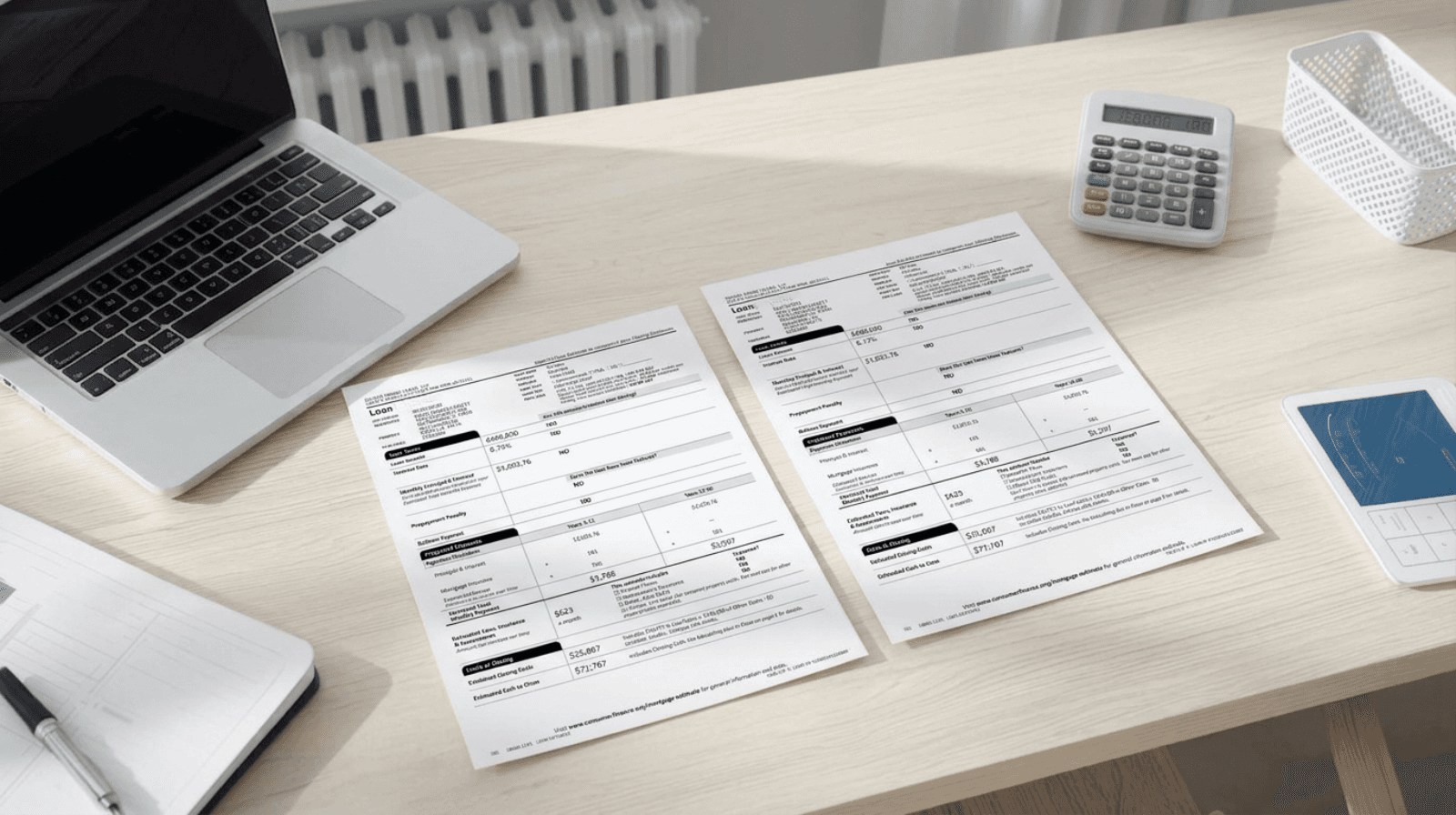
Fincast helps you see if you're getting the best deal for your credit profile. After you receive a Loan Estimate from a single lender, you can use Fincast with these simple steps:
Upload your Loan Estimate securely.
Fincast benchmarks your deal across vetted lenders.
Lenders anonymously compete to beat your offer.
You choose the strongest offer — no spam, no extra credit pulls.
Understanding your credit score factors helps you position yourself for stronger offers — and Fincast helps you see which lenders reward that strength.
📊 Real Impact Example:
A 760 credit score versus a 680 score might mean the difference between a 6.5% and 7.25% rate on a $400,000 mortgage—roughly $175/month or $63,000 over 30 years.
FAQs
What is the most important factor in a credit score?
Payment history is typically the most influential factor in a credit score because it shows whether you reliably pay debts on time.
How fast can a credit score improve?
Some credit score improvements happen quickly, especially when credit utilization drops, while others take longer, depending on history.
Does checking my credit score lower it?
Checking your own credit score does not affect your credit score, as it’s considered a soft inquiry.
Should I close unused credit cards?
Closing cards can sometimes lower your credit score by increasing utilization or shortening your credit history, depending on your situation.
How does a credit score affect mortgage rates?
A higher credit score may help you qualify for better mortgage rates, which can reduce long-term borrowing costs.
Can one late payment ruin my credit score?
One late payment can lower a credit score, but its impact varies based on your overall credit profile and how quickly you recover.
Bottom Line
Your credit score isn't random—it's built on five measurable factors, most of which you can influence in weeks or months. Focus on paying on time, keeping balances low, and protecting your credit history length. When your score is where you want it, make sure you're working with lenders who actually reward that effort. Small improvements in your credit profile can mean thousands of dollars saved over the life of a loan.
👉Ready to put your credit score to work? If you already have a Loan Estimate and want to see if your credit profile qualifies you for better terms, Fincast shows you competitive offers from vetted lenders—without extra credit pulls.
Disclaimer: Nothing in this content should be considered financial advice. The examples and data shared are for general information only and may not reflect your personal situation. We do not guarantee the accuracy or completeness of the information provided. Always do your own research and speak with a qualified financial advisor before making any financial decisions.
Ready to Save On Your New Mortgage?